
- Begin selection with the required working pressure and required volumetric flow rate.
- Review the vacuum cycle, leakage, and line layout. Where wet carryover is present, confirm the liquid condition and inlet protection before selecting the package.
- For the first RFQ, pressure and required volumetric flow rate are enough to begin. The remaining process details can be confirmed during follow-up.
Working pressure and the operating cycle
Filtration and dewatering equipment is selected for the point at which it actually operates. Begin with the required working pressure and volumetric flow rate, then check how that duty is distributed through the cycle.
Ultimate pressure is measured under a separate test condition. It helps describe a pump, but the package still needs to provide the required volumetric flow rate at the working pressure after piping, leakage, and cycle timing are considered.
On a typical filter cycle, demand may move from a short pull-down after loading to holding vacuum between process steps. The review should answer three practical questions:
| Vacuum duty | Question for the pump-package review |
|---|---|
| Pull-down after loading or a process step | Can the system remove the air load within the available time at the required working pressure? |
| Holding vacuum | Can the system maintain the required vacuum between steps with leakage and process load present? |
| Repeated operation | Does the configuration suit the operating pattern, drainage needs, and maintenance access? |
Equipment type and line layout affect the result. A disc filter, belt filter, or another dewatering arrangement can require a different vacuum response even when the nominal capacity looks similar.
For the basic selection method, see how to choose a dry screw vacuum pump by working pressure and volumetric flow rate.
What sets the required volumetric flow rate
The required volumetric flow rate comes from the system duty, not from the pump nameplate alone. On a filtration or dewatering line, the air load changes with equipment condition and the way the line is operated.
| Selection factor | Effect on the review |
|---|---|
| Leakage | Creates a continuous air load while the system is holding vacuum. |
| Vessel and line volume | Larger connected volume means more air must be removed before the process reaches its working condition. |
| Pump-down and holding pattern | A short pull-down time and a long holding period place different demands on the vacuum system. |
| Line size and layout | Long, narrow, or restricted piping can slow the vacuum response at the equipment. |
| Operating hours | Continuous or extended operation affects duty, drainage planning, and maintenance access. |
| Existing pump setup | A known pump model and observed process behavior can establish a useful starting range. The actual operating point is then reviewed before matching a configuration. |
Two dewatering lines may have the same target pressure and still need different configurations. Review the operating point and the behavior of the line before treating an existing model as a replacement reference.
Wet carryover, liquid condition, and solids protection
During dewatering, liquid carryover can move through the vacuum line. A dry screw vacuum pump package can be reviewed for wet carryover into the working chamber when the liquid condition and inlet arrangement are defined.
Before finalizing the package, SC Air Power Tech checks the liquid condition, corrosion risk, carryover pattern, separator layout, drainage, and protection details. Material selection and inlet protection are then confirmed against the liquid actually carried through the line.
Solids need a separate protection path. When particles can travel with the carried liquid, the inlet-side layout may include a gas-liquid separator and inlet filter to keep them out of the rotor chamber and screw pair. The drainage arrangement also needs to remain accessible during normal operation.
For a deeper explanation of separator, drainage, and restart considerations, see what to check when liquid carryover appears in a vacuum pump application.
Confirmed dewatering references
The two references below involve different dewatering equipment and operating conditions. They help frame an initial discussion; the final configuration is reviewed against the actual duty and installation conditions.
TF273L disc-filter ore dewatering reference
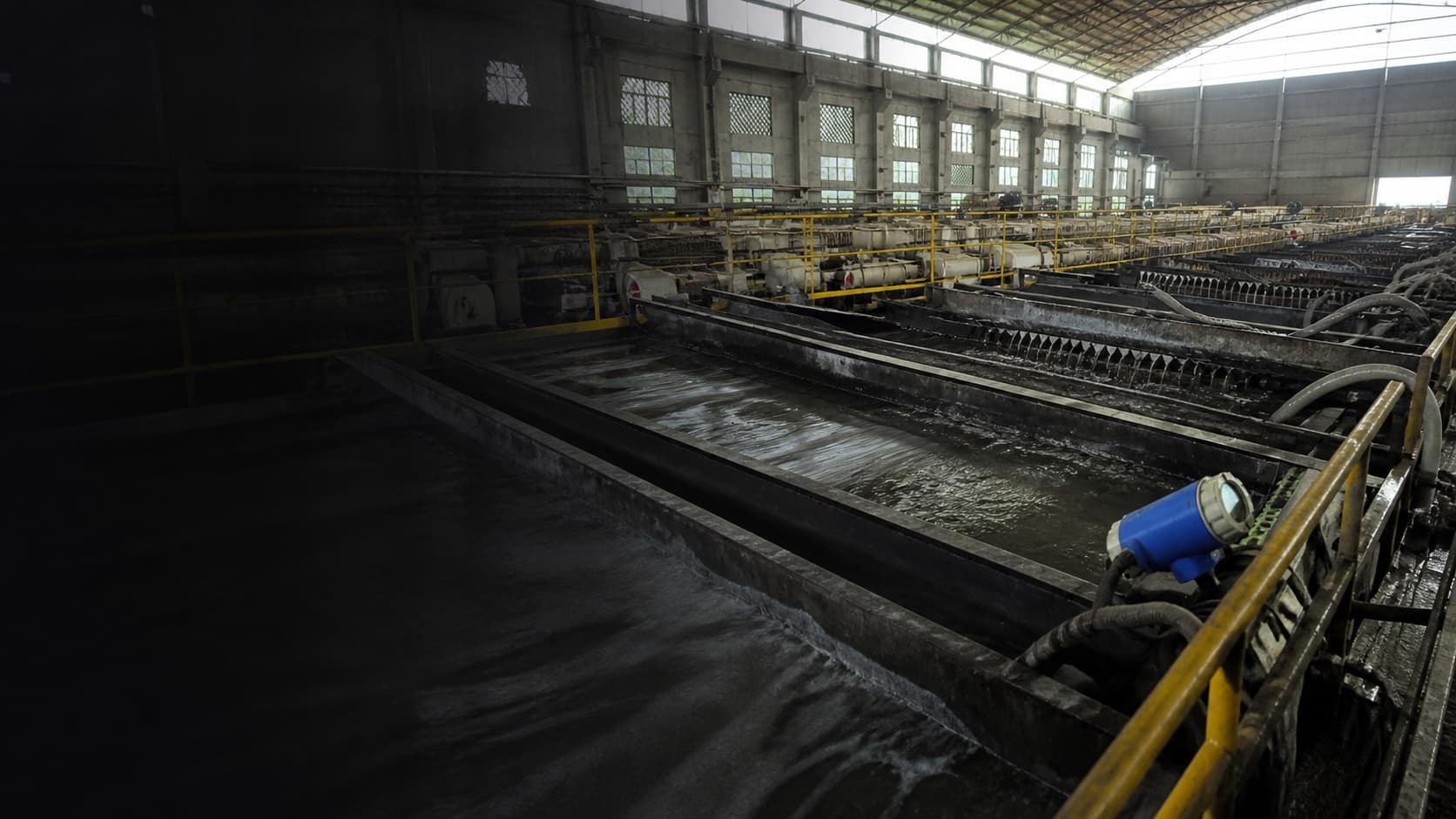
An ore-company dewatering project in Tangshan, Hebei, China used disc dewatering equipment. The customer required 210 m3/min at 25000 Pa(a), and the previous process reference was a 2BEC-42 water ring vacuum pump.
The carried liquid was confirmed as non-corrosive. Because wet carryover could include solid particles, the package used a gas-liquid separator and inlet filter to protect the rotor chamber and screw pair.
| Customer-site reference item | Confirmed project information |
|---|---|
| Model | TF273L dry screw vacuum pump |
| Application | Disc-filter ore dewatering |
| Customer required operating point | 210 m3/min at 25000 Pa(a) |
| Previous process reference | 2BEC-42 water ring vacuum pump |
| Liquid condition | Confirmed non-corrosive |
| Inlet protection | Gas-liquid separator and inlet filter |
| Site-test result | One TF273L supported three production lines |
The site test found that one TF273L supported three production lines. The TF273L ore dewatering case study records the site test, measured power data, and customer feedback for this setup.
TF238 belt-filter dewatering reference
At a phosphochemical factory in Nanzhang, Hubei, China, a TF238 dry screw vacuum pump is installed on a belt-filter dewatering line. The specified operating point is 183 m3/min at 30,000 Pa(a).
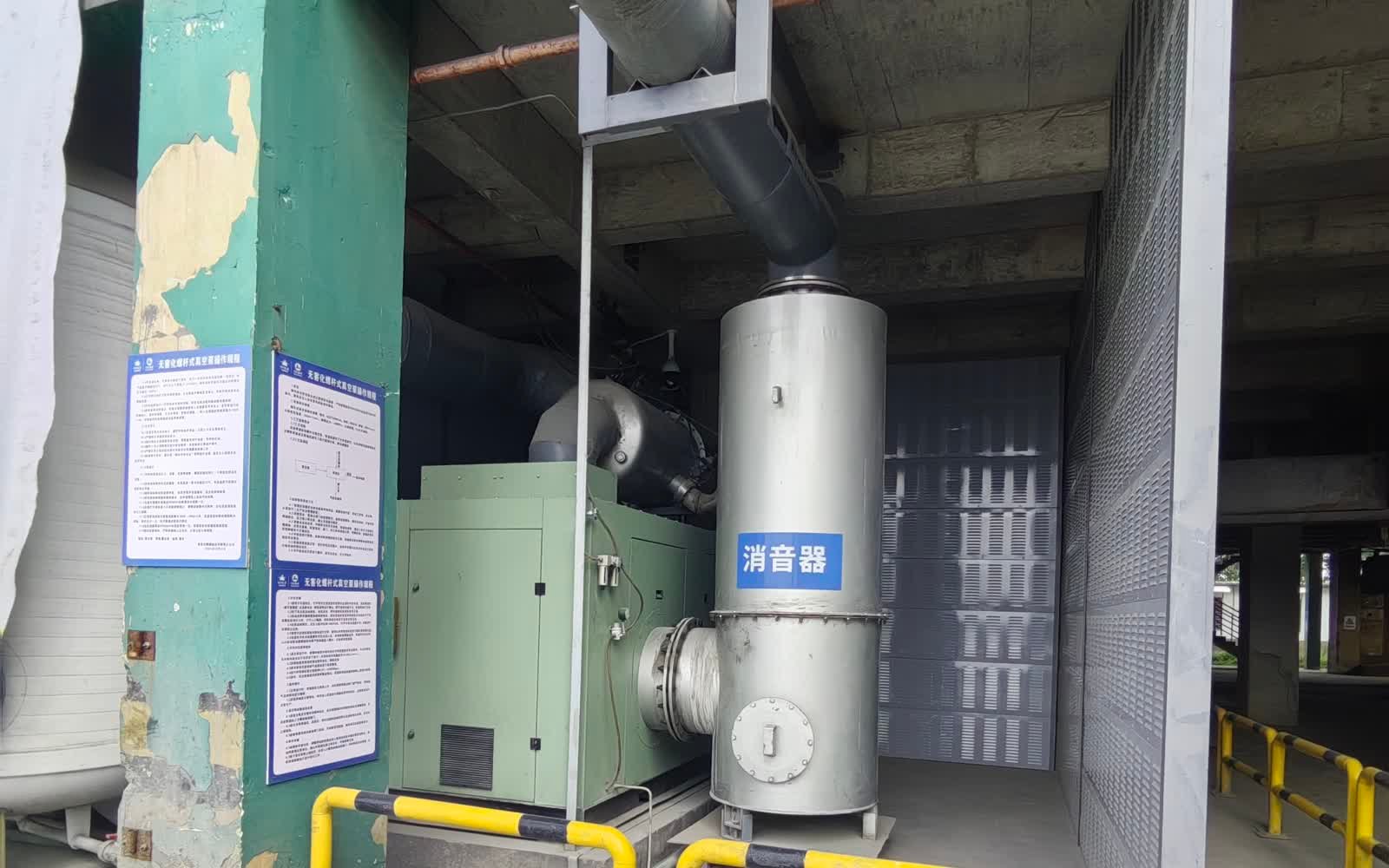
For a similar belt-filter line, begin with its own working pressure, required volumetric flow rate, and cycle conditions.
What this means for your RFQ
For a filtration or dewatering RFQ, send the working pressure and required volumetric flow rate first. These two values establish the operating point for the initial review.
During follow-up, we confirm the vacuum cycle, wet carryover, liquid condition, solids risk, and inlet protection before recommending the final package. Send the first two values through the contact page to begin.