
- Start the RFQ with pressure and required volumetric flow rate. If inlet gas temperature is already known, include it; if not, it can be confirmed during follow-up.
- A dry screw vacuum pump compresses gas inside the working chamber before discharge. During early evacuation, a large amount of near-atmospheric gas may enter the pump, and compression heat can rise quickly.
- Excess chamber temperature can affect rotor clearance, housing clearance, sealing materials, cooling design, and exhaust-temperature review.
- If the gas is hot, varies during operation, or contains vapor that may cool and condense, send the normal inlet temperature, maximum inlet temperature, and any exhaust-temperature requirement when available.
- Temperature gives SC Air Power Tech a thermal boundary for reviewing the pump head, cooling arrangement, sealing materials, and accessories against the actual duty.
Why inlet gas temperature is checked after the first operating point
For the first RFQ, pressure and required volumetric flow rate are still enough to begin. Those two values set the first operating point for the selection discussion.
Inlet gas temperature is checked next because the pump handles the gas in the condition it reaches the inlet. Inside the working chamber, the gas is compressed so it can leave the pump close to, or slightly above, atmospheric pressure.
That compression helps discharge the gas, but it also adds heat. During the first stage of evacuation, a large volume of gas at or near atmospheric pressure can enter the pump and be compressed. If the inlet gas is already hot, chamber temperature can rise faster than the design allows.
Why high inlet temperature changes the pump review
A dry screw vacuum pump depends on precise clearance between the rotors and between the rotors and the housing. Those clearances allow the pump to run efficiently without contact in the working chamber.
If chamber temperature rises too far, thermal expansion becomes part of the design review. In mild cases, expansion can cause rubbing. In severe cases, the pump head can be damaged. This is why inlet gas temperature is reviewed before the pump package is confirmed.
For higher-temperature gas, the review may change around:
| Review item | Why it matters |
|---|---|
| Rotor and housing clearance | Thermal expansion must stay within the reviewed operating range |
| Cooling method | The pump may need stronger heat removal from the working chamber area |
| Water jacket review | A water jacket can help transfer heat away from the pump chamber when the duty requires it |
| Sealing materials | Seal selection should consider the normal temperature and the possible maximum temperature |
| Protection accessories | Temperature monitoring or additional protection may be reviewed for some duties |
| Exhaust temperature | Some sites need the discharged gas temperature controlled after the vacuum system |
The configuration depends on the actual duty. Temperature gives the review a thermal boundary for the pump head, sealing materials, and any cooling or exhaust treatment that may be needed.
What temperature information is useful for the review
The first message can stay simple. If the temperature is known, send it with the pressure and required volumetric flow rate. If it is not ready, keep it as a follow-up item.
The most useful temperature details are:
| Temperature detail | How it helps the review |
|---|---|
| Normal inlet gas temperature | Shows the usual operating condition |
| Maximum inlet gas temperature | Helps review the highest possible chamber temperature |
| When the high temperature appears | Separates startup, production, cleaning, or batch-change conditions |
| Whether vapor may cool before the pump | Helps identify possible condensation risk |
| Exhaust temperature requirement | Shows whether a downstream cooler or discharge-temperature review may be needed |
Approximate values are acceptable at the beginning. During the technical discussion, SC Air Power Tech can review the gas condition and confirm how the process temperature affects pump design.
When temperature and vapor condition should be reviewed together
Temperature and vapor condition often need to be checked together, especially when the gas stream contains water vapor or another condensable vapor. Hot vapor may remain in the gas phase at one point in the system, then condense after cooling in the line, near the pump, or after discharge.
If the process stream includes vapor, send the temperature you know and describe the vapor condition if it is already available. The detailed gas and vapor review can continue after the first RFQ.
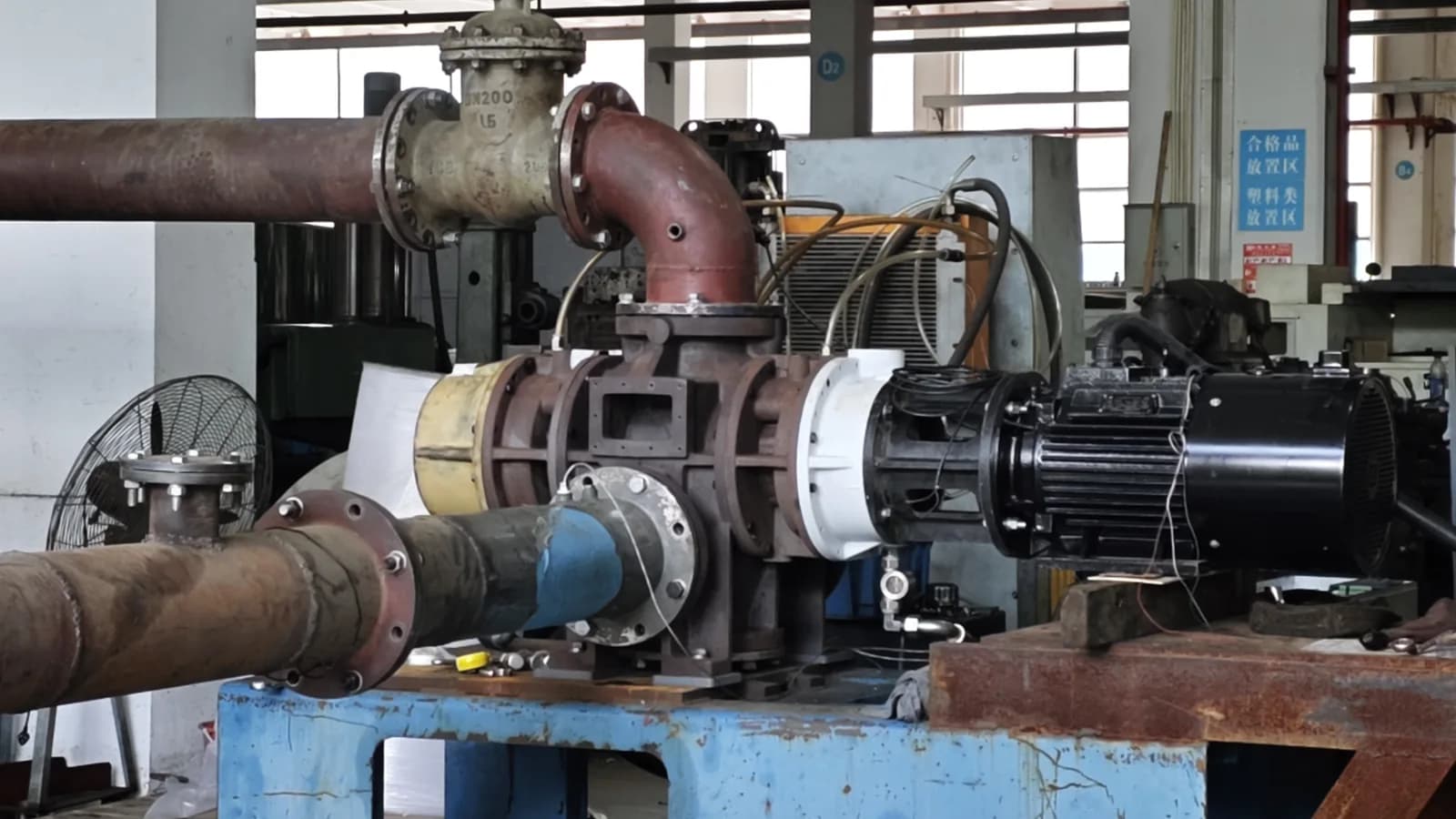
In one anonymous sugar-industry review, the process gas was water vapor entering the pump at 81°C. The working point was 50000 Pa(a) with a required volumetric flow rate of 53.5 m3/min. SC Air Power Tech reviewed the duty around a TF140 series pump head, with materials and sealing customized for the process condition.
This reference shows why temperature is handled as part of the configuration review. A similar inlet temperature on another project may still lead to a different pump head, cooling arrangement, sealing material, or accessory layout.
What to send in the first message
To start the RFQ, send the pressure or pressure range and the required volumetric flow rate. If inlet gas temperature is already available, include it as supporting information.
| First RFQ data | Helpful follow-up information |
|---|---|
| Pressure or pressure range | Normal inlet gas temperature |
| Required volumetric flow rate | Maximum inlet gas temperature |
| Gas or vapor condition, if known | Whether temperature changes during operation |
| Contact details | Exhaust temperature requirement |
A practical RFQ can start before the temperature value is final. Begin with the operating point, then confirm temperature, gas condition, cooling needs, and exhaust requirements step by step.
For the pressure and volumetric flow rate starting point, see How to choose a dry screw vacuum pump by working pressure and volumetric flow rate. To send your current operating point, use the contact page.