
Dry Screw vs. Liquid Ring Vacuum Pumps: A Field Engineer’s Guide to TCO and Efficiency
Last year, a iron ore processing plant in middle China contacted us about a problem they had been ignoring for years.
Their liquid ring vacuum system had always “worked fine.” Vacuum levels were stable, operators were familiar with the equipment, and production never completely stopped. But once the factory started reviewing energy costs more carefully, the numbers became difficult to ignore.
The original liquid ring vacuum pumps were consuming nearly 400 kW during continuous filtration operation. Water treatment costs kept rising. Scaling (calcification) inside the circulation system became more frequent. Maintenance teams were forced into a cycle of replacing worn components every few months.
What surprised the customer most was this: The vacuum pumps themselves had not technically failed — but the operating cost of keeping them running had quietly become one of the largest hidden expenses on the entire production line.
After replacing the legacy system with dry screw vacuum pumps, actual operating power dropped to roughly 120 kW under the same process conditions. That’s a 70% reduction in power consumption alone.
Field Note: In my experience, engineers often focus on the "pumping speed" on the datasheet, but they forget that a liquid ring pump's efficiency is heavily dependent on the temperature and quality of the service liquid. In this case, scaling was acting like a "silent brake" on their efficiency.
This situation is becoming increasingly common across chemical plants, pharmaceutical factories, paper mills, lithium processing lines, and industrial filtration systems worldwide.
So the real question today is no longer: “Can liquid ring vacuum pumps still work?”
Instead, most savvy engineers are now asking: “At what point does continuing to use a liquid ring system become more expensive than replacing it?”
What Is the Difference Between Dry Screw and Liquid Ring Vacuum Pumps?
The fundamental distinction lies in the sealing and compression mechanism within the vacuum chamber. Liquid ring vacuum pumps rely on the continuous circulation of a service liquid (usually water) to create a seal, while dry screw vacuum pumps operate with a completely "dry" compression chamber, utilizing precision-engineered clearances instead of a liquid barrier.
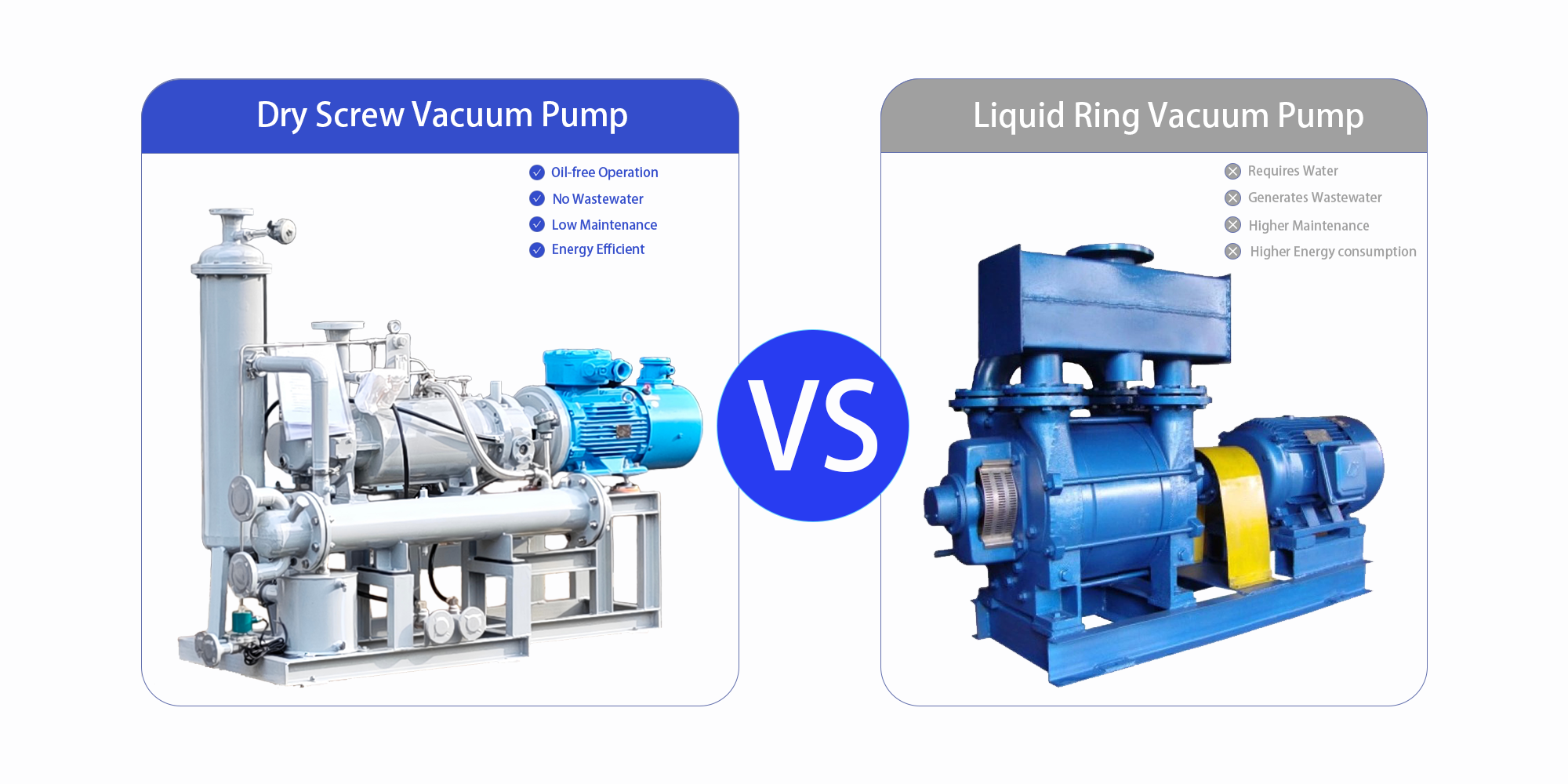
From a field engineering perspective, that single design choice is the "domino" that triggers a cascade of operational impacts:
- Energy Efficiency: Liquid ring pumps must constantly move a heavy "ring" of water, creating significant frictional drag. Dry screw pumps eliminate this hydraulic loss, often reducing power demand by 30% to 70%.
- Utility & Waste Management: Liquid ring systems require a steady supply of cooling water and produce contaminated process effluent. Dry screw pumps run without process water, virtually eliminating wastewater treatment costs.
- System Reliability: Liquid ring pumps are prone to scaling (calcification) and cavitation, which can seize the pump or erode the impeller. Dry screw pumps use non-contacting rotors, avoiding these liquid-specific failure modes.
- Vacuum Stability: A liquid ring’s ultimate vacuum is limited by the vapor pressure of its service liquid. Dry screw pumps provide stable, deep vacuum (down to 0.01 mbar) regardless of water temperature.
The ultimate vacuum of a liquid ring pump is physically limited by the vapor pressure of the service liquid, meaning performance drops sharply if the cooling water temperature risesTrue
In liquid ring pumps, the seal is formed by a liquid; if that liquid gets warm, it begins to flash into vapor, cavitation occurs, and the pump loses its ability to hold a deep vacuum.
Dry screw vacuum pumps eliminate the risk of cavitation because they do not use a liquid ring to compress the gasTrue
Cavitation is a phenomenon exclusive to liquid-handling or liquid-sealed pumps. Since dry screw pumps use air/gas as the medium in the compression chamber, they are immune to cavitation damage.
Field Note: When I walk through a plant and hear a "rattling marbles" sound coming from a pump, it’s almost always a liquid ring pump suffering from cavitation because the cooling water is too hot. Switching to dry screw technology doesn't just save energy—it saves your ears and your maintenance budget.
Key Takeaway: In modern manufacturing, the initial purchase price is just the tip of the iceberg. Factors like environmental compliance and vacuum stability now dictate the true value of the equipment on your production line.
What Is a Liquid Ring Vacuum Pump?
A liquid ring vacuum pump is a positive displacement machine that uses a service liquid—typically water—to create a rotating "piston" inside the casing. As the multi-blade impeller rotates eccentrically, centrifugal force flings the liquid outward to form a moving ring. The changing volume between the impeller blades and this liquid ring is what traps, compresses, and exhausts the process gas.
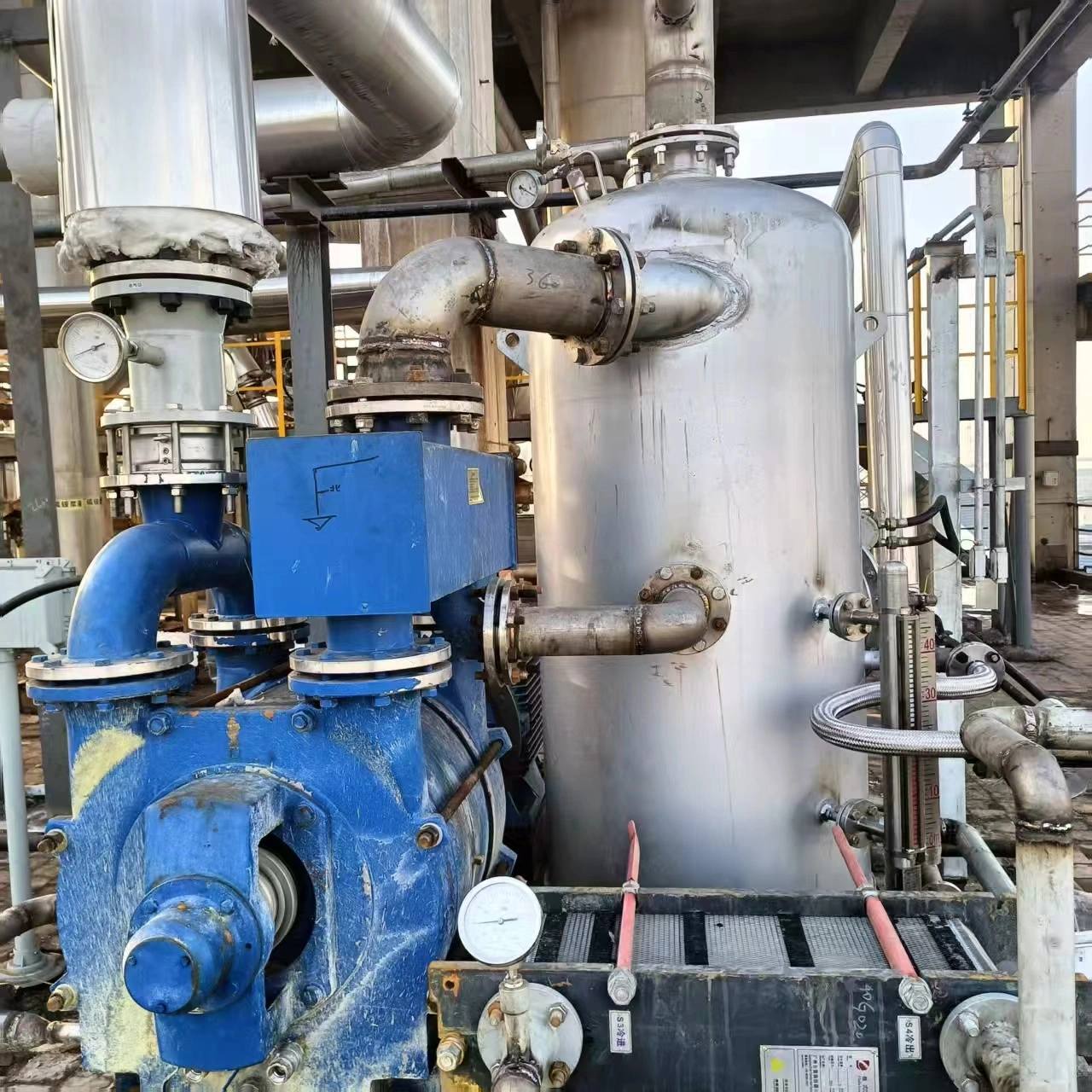
For decades, liquid ring systems were the "gold standard" for industries handling:
-
Wet gas and saturated vapors: The liquid ring acts as a direct-contact condenser, handling moisture that would wreck other pumps.
-
Contaminated or dusty process streams: The service liquid effectively "washes" the gas, trapping particulates in the discharge.
-
Explosive or temperature-sensitive gases: The near-isothermal compression (the water absorbs the heat) makes them inherently safer for volatile chemistries.
And to be fair, liquid ring pumps earned that reputation for a reason. They are mechanically rugged, have no metal-to-metal contact in the compression zone, and are incredibly forgiving under unstable process conditions.
Field Note: In the past, if a factory had abundant cooling water and low electricity prices, the liquid ring pump was the "safe bet." I’ve seen old units running for 30 years with nothing more than basic bearing greasing. But "reliable" doesn't always mean "economical" in today’s market.
The industry landscape has shifted. What worked well twenty years ago is now facing three major "modern pressures":
-
The Water Tax: Continuous liquid circulation isn't just a utility—it's a liability. Treating contaminated process water now often costs more than the power used to run the pump.
-
Energy Volatility: Moving a heavy ring of water requires massive torque. In a high-duty filtration line, that extra 200–300 kW is "dead weight" on your balance sheet.
-
Vacuum Precision: Modern processes often demand stable, deeper vacuum levels that liquid ring pumps simply cannot hit when the cooling water gets warm in the summer.
Liquid ring vacuum pumps operate on a near-isothermal compression cycle because the service liquid absorbs most of the heat generated during the compression processTrue
The large thermal mass of the circulating water ring keeps the gas temperature low, which is why these pumps are traditionally preferred for handling heat-sensitive or explosive gases.
A liquid ring vacuum pump is more energy-efficient than a dry screw pump when handling completely dry, non-condensable gasesFalse
Even with dry gas, a liquid ring pump must constantly overcome the hydraulic friction of the rotating liquid ring, which consumes significantly more power compared to the non-contacting, dry-running rotors of a screw pump.
Key Takeaway: Liquid ring technology isn't "broken," but its application window is narrowing. If your process no longer requires the "washing" effect of a liquid ring, you are likely paying a massive "liquid tax" in energy and water costs every single day.
What Is a Dry Screw Vacuum Pump?
A dry screw vacuum pump utilizes a pair of synchronized, counter-rotating helical rotors to trap and transport gas axially from the inlet to the discharge port. Because these rotors are precision-engineered to maintain a minute, non-contact clearance—governed by external timing gears—the compression chamber operates completely without the need for water, oil, or any other sealing liquid.
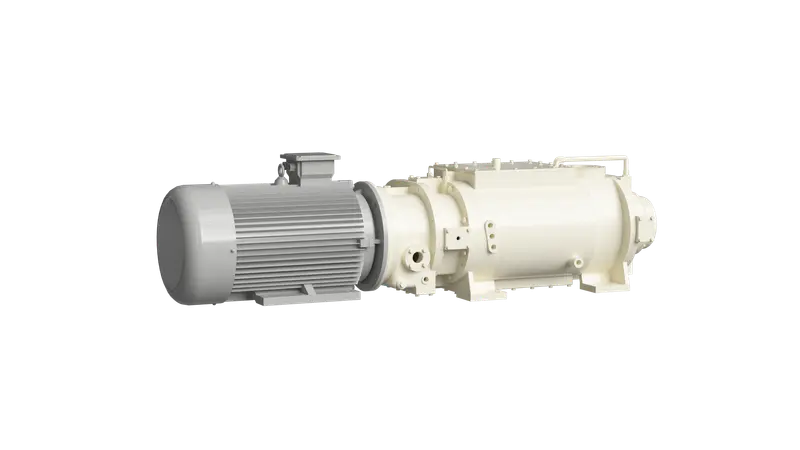
Unlike liquid ring pumps, the gas path remains completely dry. This single design shift changes the operating economics dramatically:
-
Zero Utility Contamination: With no process water consumption or wastewater discharge, you eliminate the entire infrastructure required for effluent treatment.
-
Mechanical Longevity: The absence of internal scaling (calcification) and non-contacting rotors means there is far less internal wear during operation compared to liquid-sealed units.
-
Process Purity: There is no oil or water contamination inside the vacuum chamber, ensuring your process gas remains pure—a critical factor for pharmaceutical and semiconductor lines.
Field Note: Many engineers initially focus only on the “oil-free” aspect. But the real "Aha!" moment usually comes 24 months later. That’s when the lack of water treatment bills, the absence of scaling-related downtime, and the lower energy invoices begin to show the true financial profile of a dry screw system.
Why "Dry" Means More Than "Clean": The technical advantage of dry screw technology isn't just the lack of fluid; it’s the predictability. In a liquid ring pump, your vacuum level fluctuates with the temperature of your cooling water. In a dry screw system, your performance remains stable year-round.
Dry screw vacuum pumps utilize external timing gears to synchronize the rotors, ensuring they never touch and thus eliminating the need for lubrication or sealing liquids in the compression zoneTrue
The mechanical synchronization allows the pump to maintain tight tolerances and high efficiency without any metal-to-metal contact or liquid barriers.
Dry screw vacuum pumps are generally more susceptible to damage from large liquid slugs than liquid ring pumpsTrue
Because dry screw pumps operate with very tight internal clearances and no liquid buffer, a sudden 'slug' of incompressible liquid can cause thermal shock or mechanical interference, whereas liquid ring pumps are designed to handle high liquid content.
Key Takeaway: If your goal is purely "keeping the pump alive" in a dirty, unstable environment with zero pre-filtration, a liquid ring pump is a tank. But if your goal is Total Cost of Ownership (TCO) and process stability, the dry screw pump is the precision instrument that pays for itself.
Why Are Factories Replacing Liquid Ring Vacuum Pumps?
In most industrial projects, the decision is no longer driven by vacuum performance alone. The real driver is Lifecycle Operating Cost (LCO).
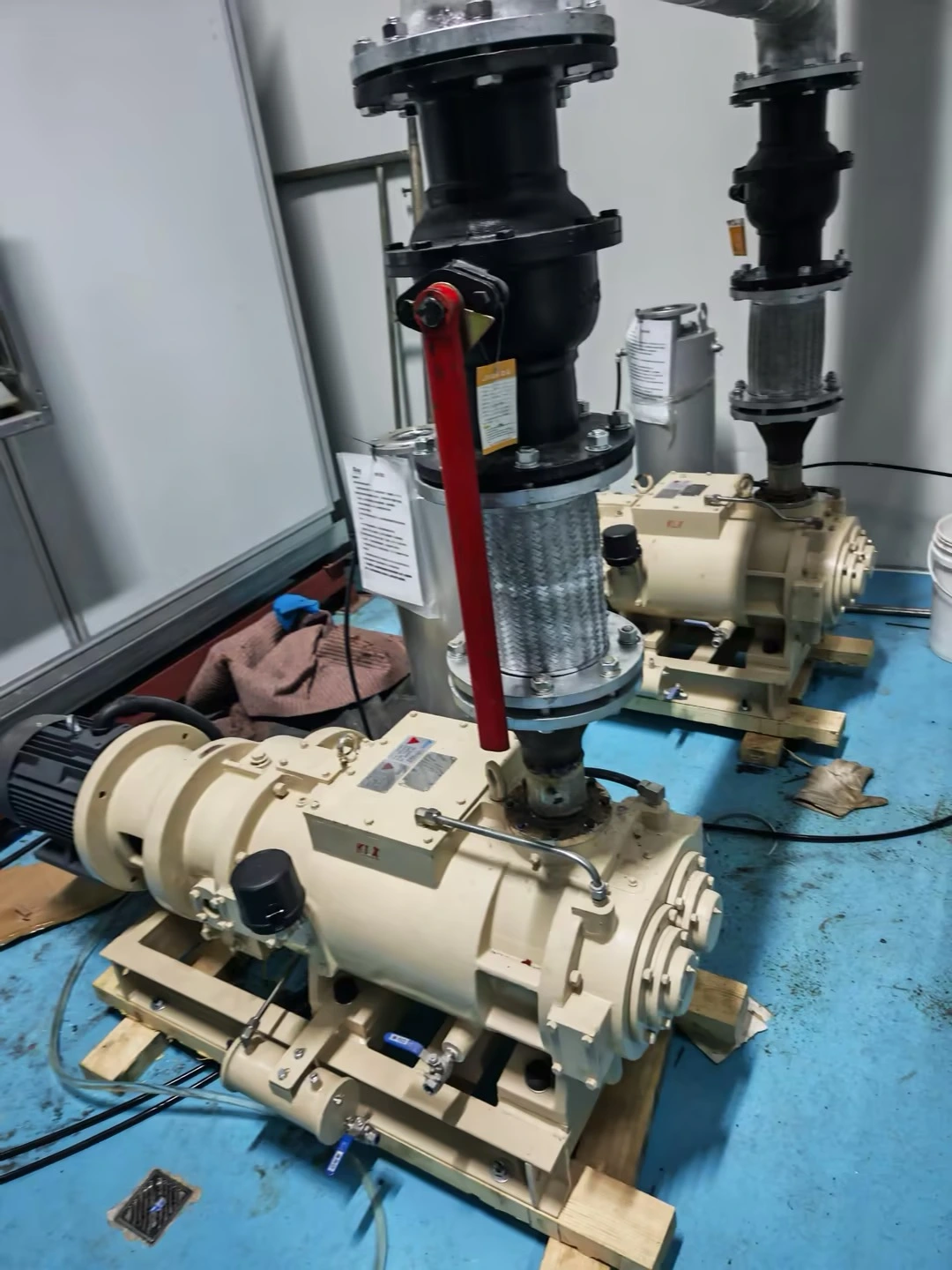
The biggest mistake I see is comparing only the initial CAPEX (equipment price). Vacuum systems in a typical plant may operate 20 hours per day, 300+ days per year, for a decade. Under these high-duty cycles, electricity and maintenance costs can exceed the original purchase price in as little as 18 to 24 months.
In several filtration projects we’ve audited, the liquid ring pumps were technically "functional," yet the factories were hemorrhaging money through:
-
Parasitic Energy Loads: Overcoming the inertia of the water ring.
-
The "Invisible" Utility Bill: Continuous cooling water and wastewater treatment charges.
-
Performance Decay: Unstable vacuum during heavy process loads due to temperature fluctuations.
Energy Efficiency: The "Liquid Friction" Tax
Dry screw vacuum pumps are significantly more energy efficient because they eliminate the fluid friction and circulation losses inherent to liquid ring systems.
Liquid ring pumps must continuously move a mass of sealing liquid. This creates unavoidable energy losses through turbulence and recirculation friction. In one paper mill project, operators discovered their vacuum system accounted for a staggering portion of the plant’s total electricity draw.
![Energy Consumption Comparison]
After retrofitting with dry screw vacuum pumps, power consumption dropped by over 50%.
Dry screw vacuum pumps typically offer 30% to 70% higher energy efficiency than liquid ring pumps in high-capacity industrial applicationsTrue
By removing the hydraulic resistance of the liquid ring, the motor's energy is used solely for gas compression rather than moving a heavy liquid mass.
Variable-pitch screw rotors can further reduce power consumption and heat generation compared to constant-pitch designsTrue
Variable-pitch rotors compress gas more gradually along the screw profile, optimizing the internal pressure gradient and reducing the work required by the motor.
The Hidden Cost of Water & Scaling
The water-related costs of a liquid ring system are far more than just the "tap water" price. They are a maintenance and compliance liability.
Most liquid ring pumps require continuous sealing water. Over time, the real costs appear in:
-
Wastewater Treatment: If the process gas contaminates the sealing water, you aren't just pumping—you're generating hazardous waste.
-
Scaling (The Silent Brake): Once mineral deposits form inside the circulation system, cooling efficiency drops. As the water temperature rises, your vacuum level crashes.
Field Note: I’ve seen maintenance teams spend entire weekends acid-cleaning heat exchangers and internal passages of liquid ring systems just to regain 50 mbar of lost vacuum. With dry screw technology, that entire "water-chemistry" headache simply disappears.
Maintenance: Simplicity vs. Reality
Dry screw vacuum pumps require far less routine maintenance because their rotors operate without internal contact or sealing liquid contamination.
On paper, liquid ring pumps appear mechanically simple. But in reality, maintenance teams are constantly fighting:
-
Impeller Erosion: Particulates in the liquid ring act like sandpaper.
-
Seal Failures: Managing mechanical seals in a liquid-filled environment.
-
Unplanned Downtime: A single scale-related seizure can halt a multi-million dollar pharmaceutical batch.
Dry screw pumps utilize non-contacting rotors and external timing gears. This ensures that the heart of the pump never touches, virtually eliminating internal wear.
Dry screw vacuum pumps require more frequent internal parts replacement than liquid ring pumps because they lack a liquid bufferFalse
The non-contacting design of dry screw rotors means there is zero internal friction or wear in the compression chamber, leading to longer service intervals for core components compared to liquid-sealed impellers.
Key Takeaway: If your plant is facing stricter environmental audits or rising energy prices, the "reliable" liquid ring pump may actually be your most expensive piece of equipment. Moving to dry screw isn't just a technical upgrade—it's a financial one.
Which Industries Benefit Most from Dry Screw Vacuum Pumps?
While the initial investment for dry screw technology is higher, the ROI (Return on Investment) is most dramatic in industries where process purity, utility costs, and environmental compliance are critical.

From my field experience, three sectors stand out as the primary beneficiaries:
1. Chemical Processing
Chemical plants are moving away from liquid ring systems to avoid the "chemistry headache" of contaminated service liquids.
-
Corrosion Resistance: Modern dry screw pumps often feature specialized coatings (like PFA or Nickel) to handle aggressive vapors.
-
Solvent Recovery: Because there is no sealing liquid to dilute the process gas, it is far easier to recover high-value solvents at the discharge port.
-
Zero Effluent: Many plants now prioritize dry systems specifically to eliminate the massive costs associated with treating chemically-laden wastewater.
Dry screw vacuum pumps are better suited for handling high-temperature corrosive gases than standard liquid ring pumps because they do not rely on the chemical stability of a service liquidTrue
Liquid ring pumps can suffer from chemical reactions between the process gas and the sealing water, leading to rapid corrosion or dangerous fluctuations in vacuum levels; dry screw pumps isolate these risks through material selection and dry operation.
2. Pharmaceutical Production
In a world of strict GMP (Good Manufacturing Practice) standards, oil-free and water-free operation is no longer a luxury—it’s a requirement.
-
Ultra-Clean Vacuum: Dry operation ensures zero back-migration of oil or service liquid into the process chamber.
-
Critical Applications: This is essential for solvent recovery, vacuum drying, and distillation, where even trace contamination can ruin a multi-million dollar batch.
-
Compliance: Several pharmaceutical customers we’ve worked with switched to dry screw systems primarily to simplify their validation processes and reduce the risk of cross-contamination.
3. Pulp and Paper
In the paper industry, the scale of operation is the deciding factor. These mills run 24/7, and their vacuum systems are massive.
-
The Energy Multiplier: Because vacuum systems are used continuously for dewatering and filtration, a 50% energy saving isn't just a few dollars—it’s a significant reduction in the total production cost per ton of paper.
-
System Simplicity: Eliminating the cooling towers and circulation pumps required by liquid ring systems reduces the overall mechanical footprint and maintenance complexity of the mill.
Field Note: I remember a paper mill manager who was skeptical about the higher CAPEX of a dry screw pump. We ran the numbers on his electricity bill and water treatment costs for one year. The "expensive" pump paid for itself in just 14 months. After that, it was pure profit for his department.
In paper mill filtration, the higher initial cost of a dry screw pump is typically offset by energy savings within the first 1-2 years of continuous operationTrue
Due to the high power requirements of large-scale liquid ring pumps, the 30-50% efficiency gain from dry screw technology creates a rapid payback period in high-duty cycle environments.
Summary of Industrial Impact
| Industry | Primary Driver for Switching | Key Technical Advantage |
|---|---|---|
| Chemical | Wastewater reduction | Corrosion-resistant coatings |
| Pharma | Product purity | Oil-free / Zero back-streaming |
| Paper | Energy OPEX | High efficiency in 24/7 cycles |
| Lithium | Process stability | Handles fine particulates with pre-filtration |
When Does a Liquid Ring Vacuum Pump Still Make Sense?
Liquid ring vacuum pumps are far from obsolete. In specific industrial contexts, they remain a highly practical—and sometimes superior—option. The industry isn't moving away from liquid ring technology because it "doesn't work," but because its economic sweet spot has narrowed. From my perspective, a liquid ring system still makes sense in these four scenarios:
-
Extremely Limited Initial Budget (CAPEX)
If your primary constraint is the upfront purchase price and you have limited access to financing, the lower initial cost of a liquid ring pump is hard to ignore. In "rough vacuum" applications where high precision isn't required, the entry price can be significantly lower than dry screw alternatives. -
Simple Process Requirements
If your process involves massive amounts of liquid carryover or is extremely "dirty" without the possibility of effective pre-filtration, the liquid ring pump's ability to act as a scrubber is a mechanical advantage. It is a "tank" that can swallow process upsets that might trigger a high-temperature alarm in a dry pump. -
Existing "Sunk" Infrastructure
If your factory already has an oversized, efficient cooling water circulation system and a dedicated wastewater treatment plant with excess capacity, the "hidden costs" of water usage are already baked into your overhead. In this case, the friction of changing technologies might outweigh the immediate energy savings. -
Low-Duty or Intermittent Cycles
If the pump only runs for 30 minutes twice a day, the energy savings of a dry screw pump will take a decade to pay back the initial investment. The higher the duty cycle, the stronger the case for Dry Screw; the lower the duty cycle, the more Liquid Ring makes sense.
Liquid ring vacuum pumps are generally more tolerant of liquid slugs and particulates in the gas stream compared to dry screw pumpsTrue
Because the liquid ring pump already operates with a liquid-filled chamber, it can handle significant liquid carryover. In contrast, dry screw pumps have tight clearances that can be compromised by incompressible liquids or solids.
The performance of a liquid ring vacuum pump remains constant regardless of the temperature of the sealing waterFalse
The ultimate vacuum is physically limited by the vapor pressure of the water; as the water heats up, the pump's capacity and vacuum depth decrease significantly.
Final Verdict: The key is understanding your Operating Environment before signing the PO. If you are running a 24/7 high-purity pharmaceutical line, the dry screw pump is a no-brainer. If you are a small workshop running a simple filtration task once a week, the liquid ring pump is your most economical friend.
Field Note: Don't just look at the pump; look at the meter. If your water and electricity meters are spinning faster than your production line, it’s time to call us for a TCO audit.
Which Vacuum Pump Is Better Overall?
If the only priority is minimizing initial equipment investment (CAPEX), liquid ring vacuum pumps still offer a lower purchase price. However, in the modern industrial landscape, "cheap to buy" often translates to "expensive to own."
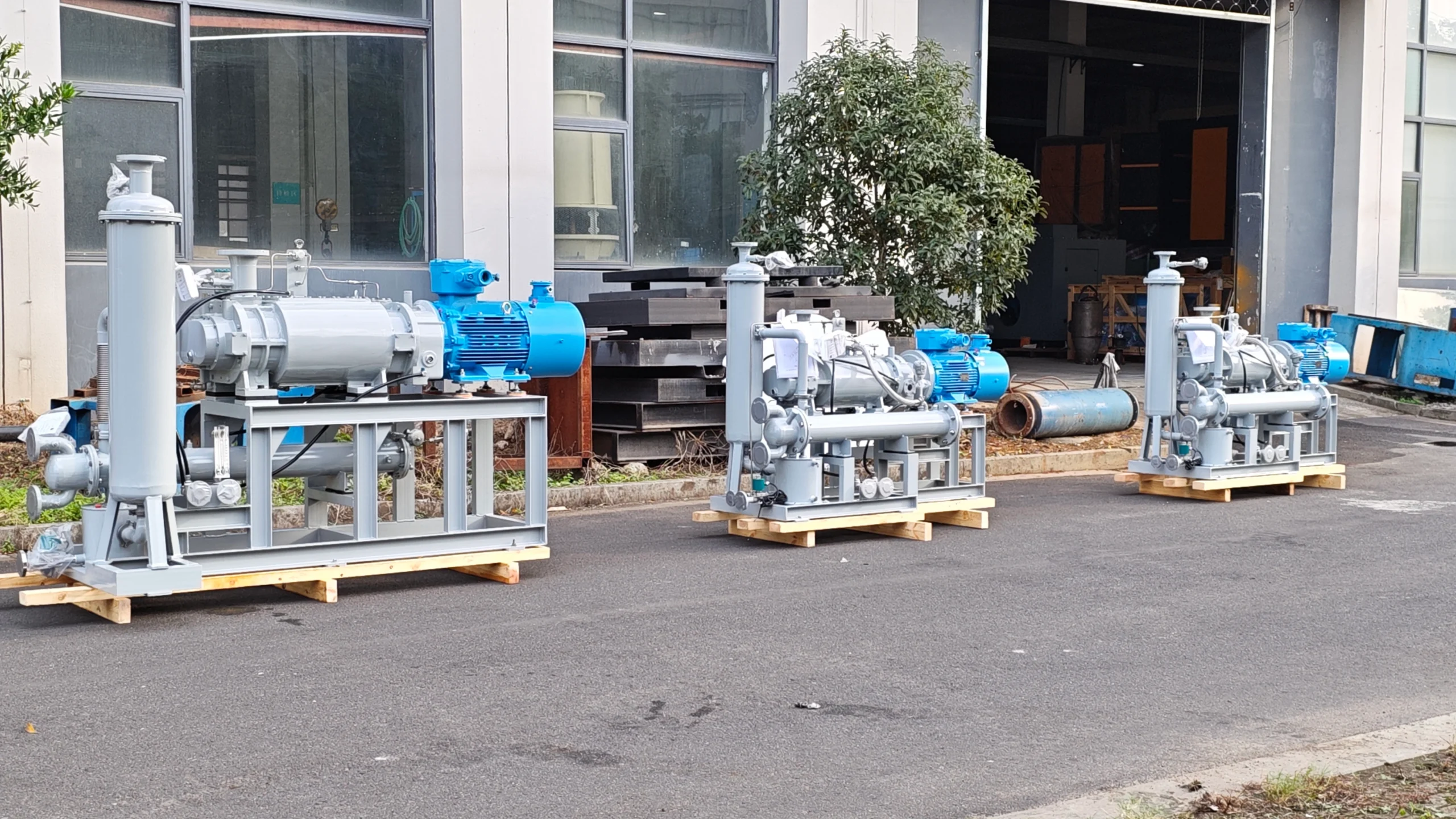
Today, most forward-thinking factories have shifted their focus toward Total Cost of Ownership (TCO) and Lifecycle Economics. They are no longer just buying a pump; they are investing in:
-
Lower Energy Baselines: Reducing the factory's carbon footprint and utility spend.
-
Maintenance Predictability: Moving from "firefighting" repairs to scheduled, minimal servicing.
-
Environmental Compliance: Eliminating the liability of process-contaminated wastewater.
-
Production Continuity: Ensuring that vacuum stability never becomes the bottleneck of a multi-million dollar production line.
The transition from liquid ring to dry screw technology isn't happening because the old pumps "stopped working." It’s happening because the economics of industrial operation have changed. In high-duty, continuous-process environments, the dry screw vacuum pump is no longer a "premium upgrade"—it is a strategic tool for operational efficiency.
Field Note: My final advice to any plant manager is this: Don't let the sticker price blind you. A pump that saves you $10,000 on day one but costs you $5,000 extra in electricity and water every month is a liability, not an asset. Run the numbers over a 3-year window, and the "better" choice usually becomes clear.
Key Takeaway:
-
Choose Liquid Ring for low-duty cycles, extreme liquid carryover, or when initial cash flow is the only constraint.
-
Choose Dry Screw for 24/7 operations, pharmaceutical/chemical purity, and any project where ROI and energy efficiency are the primary KPIs.