
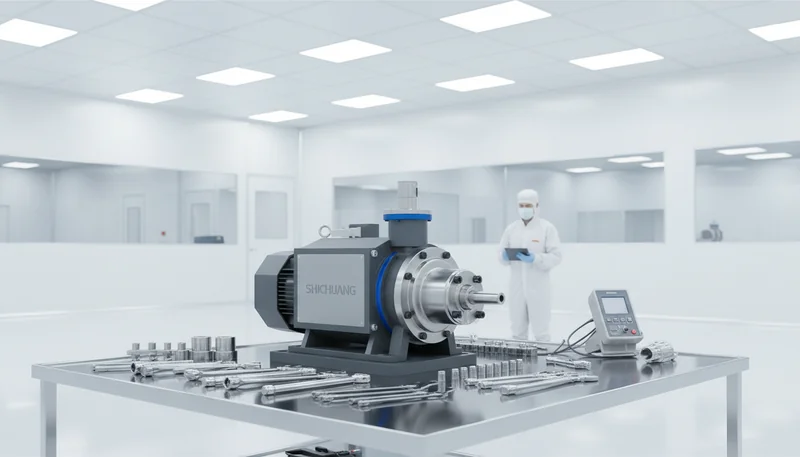
How to Maintain Oil-Free Screw Vacuum Pumps: Field Guide to Avoid Costly Failures
Last month, an engineer from a pharmaceutical plant in Hangzhou asked me why their oil-free screw vacuum pump failed only eight months after installation, despite following “standard” maintenance. The real lesson? Not all preventive routines catch what matters—and it’s usually the little things that escalate into costly downtime.
Oil-free screw vacuum pumps achieve reliable operation by using two intermeshing rotors within a precisely machined chamber to compress and transport gas without oil in the working space. The absence of oil eliminates product contamination, but requires careful oversight of bearings, cooling systems, rotor clearances, and inlet filtration1. Proper inspection routines—including daily vibration and noise checks, weekly filter assessments, and rigorous coolant management—are essential for preventing overheating, rotor scoring, and premature wear.
How Do Oil-Free Screw Pumps Stay Reliable?
Oil-free screw vacuum pumps maintain reliability through precise rotor clearances2, robust inlet filtration3, consistent cooling (air or water), and proper lubrication of bearings and gears using oil or high-temperature grease in isolated areas. Routine inspections focusing on these critical subsystems help prevent contamination, overheating, or mechanical failures that result in unplanned downtime and costly repairs.
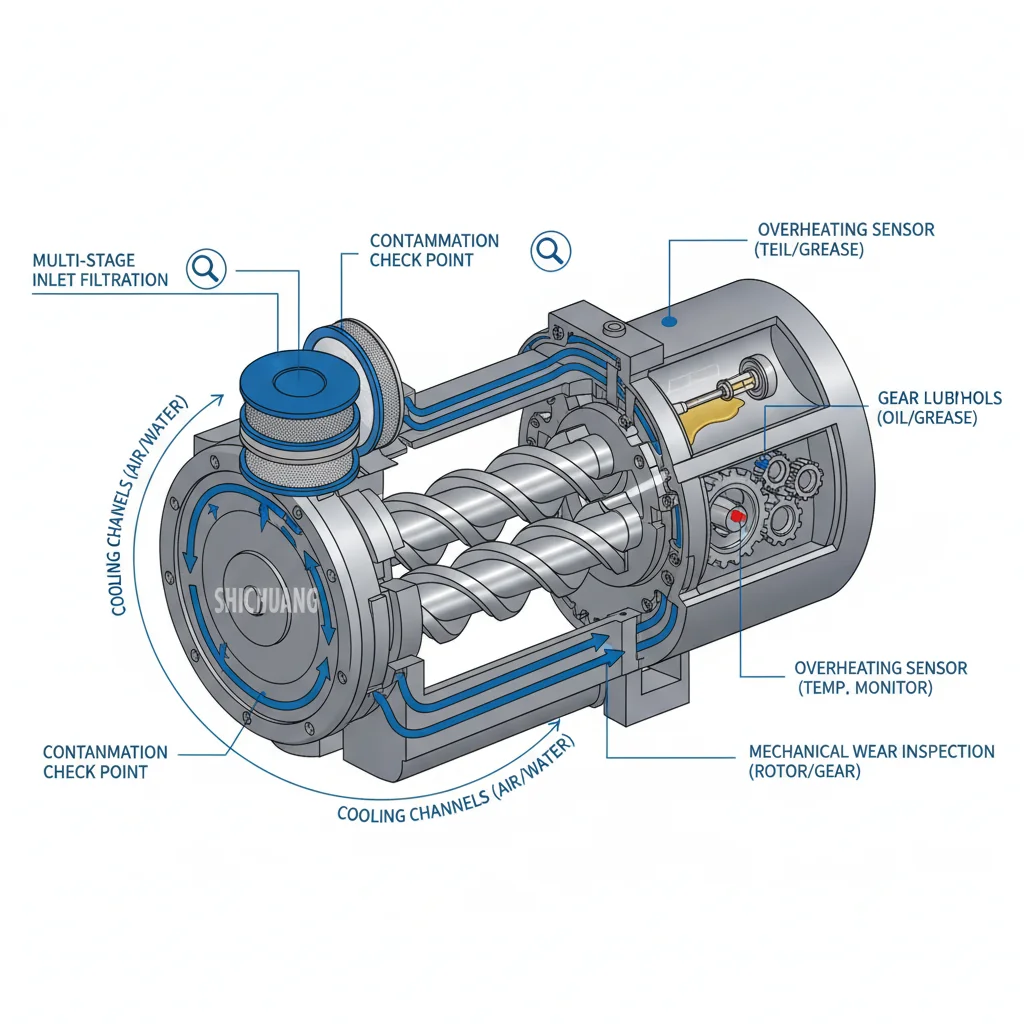
Most people don’t realize that oil-free screw vacuum pumps rely on precise engineering at several key points. The rotors run with clearances often less than 0.1 mm—tight enough that even small particles or thermal expansion can cause problems. That’s why robust inlet filtration is so important. I’ve seen filter elements rated down to 5 microns used to keep out dust and protect the rotors’ precision surfaces. For cooling, models above 150 m³/h usually come with either air or water cooling channels that wrap directly around the screw chamber. This keeps operating temperatures within the safe 50-80°C range, maintaining both efficiency and rotor clearance.
Bearings and timing gears present another challenge. Although the pumped gas never touches lubricants, isolated oil or high-temperature grease is essential for these loaded parts. On pumps rated for continuous duty—say, 24/7 operation in electronics or food plants—I always suggest monitoring bearing temperatures and re-greasing intervals closely. The main failure points I’ve encountered are bearing seizure from overheating or unexpected particulate ingress.
To be honest, the key is understanding your pump’s exact subsystem configuration—air versus water cooling, oil versus grease-lubricated bearings—so you can plan targeted inspections. Don’t just wait for alarms. Routine checks around the rotors, bearings, cooling lines, and inlet filter4 catch issues before they become expensive surprises.
Precision rotor clearances in oil-free screw pumps are typically maintained below 0.1 mm to ensure optimal vacuum performance and prevent contact during thermal expansionTrue
Maintaining rotor clearances under 0.1 mm is critical for oil-free screw pumps because the lack of oil lubrication means the rotors rely solely on engineered clearances to avoid metal-to-metal contact. Thermal expansion and particulate contamination can otherwise cause rotor damage or decreased efficiency.
Oil-free screw vacuum pumps can operate reliably without any inlet filtration if the environment is clean enoughFalse
Despite operating in cleaner environments, even minimal dust or particles can damage rotors due to the extremely tight clearances under 0.1 mm. Robust inlet filtration, often rated to 5 microns or finer, is essential to protect these precision surfaces and maintain pump reliability.
Key takeaway: Reliability in oil-free screw vacuum pumps hinges on targeted maintenance of rotors, bearings, cooling systems, and inlet filtration. Understanding subsystem configurations—such as cooling type and bearing lubrication—is essential for proactive inspections and preventing failures, rather than relying solely on alarms or post-failure interventions.
What Are Essential Daily and Weekly Inspections?
Daily inspections for oil-free screw vacuum pumps focus on detecting abnormal noise, vibration, and temperature increases using tools like infrared thermometers. Monitoring casing temperature—keeping discharging gas below 40 °C—is crucial for reliability and regulatory compliance. Weekly checks extend to filters, safety interlocks, sensors, and leak detection. Properly logging data and standardizing checklists improves maintenance consistency and reduces risk of costly failures.
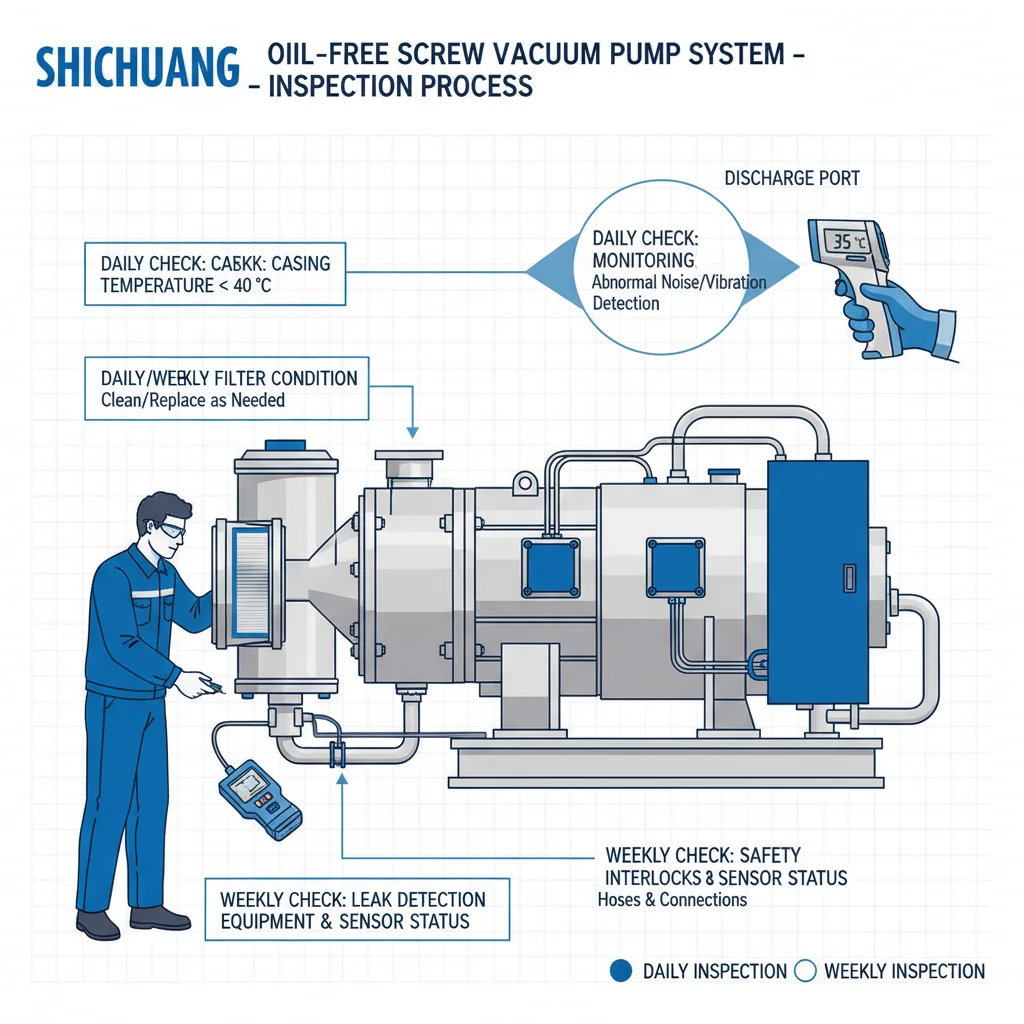
Let me share something important about keeping oil-free screw vacuum pumps reliable—your daily and weekly inspection habits really determine long-term performance. Each day, listen for any abnormal noise from the drive end or gearbox. Even a faint ticking or an unusual hum can be an early sign of bearing or rotor wear. I suggest using an infrared thermometer5 on the pump casing; temperatures at the discharge port should stay below about 40 °C. Higher readings often mean restricted cooling or overloading—two big drivers of premature failures, especially when your process requires stable vacuum for long hours. Don’t forget to feel for vibration at the frame or observe for persistent leaks; those small issues tend to snowball if ignored.
Weekly, go deeper. Check the inlet filter—not just visually, but by monitoring flow rate changes. In my experience, a partially blocked filter can quickly reduce pumping speed by 10–20%, especially on a model rated for 100 m³/h displacement. Test all safety interlocks and verify sensor data matches your handheld instruments. Documenting these findings with a simple checklist helps spot slow-developing trends. I always recommend sharing this log between shifts. Consistent routines are your best safeguard against unplanned downtime or a costly rotor overhaul. Start early, standardize, and your pump will reward you with years of stable service.
Regular infrared temperature checks on the discharge port of oil-free screw vacuum pumps should not exceed 40 °C to prevent thermal degradation of internal componentsTrue
Maintaining the discharge port temperature below 40 °C ensures the pump’s cooling system is effective, preventing heat buildup that can cause premature wear of bearings and rotors, which is critical for pump longevity and reliable operation.
Daily inspections of oil-free screw vacuum pumps should include checking oil levels in the gearbox to ensure proper lubricationFalse
Oil-free screw vacuum pumps eliminate the need for oil in the compression chamber, but their gearboxes still require lubrication; however, the claim is misleading because daily gearbox oil level checks are generally excessive—these are typically done weekly or during scheduled maintenance, not daily.
Key takeaway: Routine daily and weekly inspections—standardized by checklists—are critical for early detection of bearing or rotor issues in oil-free screw vacuum pumps. This proactive strategy minimizes unplanned downtime, extends equipment lifespan, and supports operational safety, while ensuring temperature and performance standards are consistently met across all shifts.
How Is Thermal Control Maintained in Oil-Free Screw?
Maintaining consistent temperature and effective cooling in oil-free screw vacuum pumps prevents thermal trips6 and premature wear. Operators should ensure proper water flow or unobstructed airflow through heat exchangers, monitor pump body temperatures below 40 °C, regularly inspect and clean cooling components, and follow disciplined shutdown sequences. Draining water-cooled pumps during cold weather prevents costly freeze-related damage.
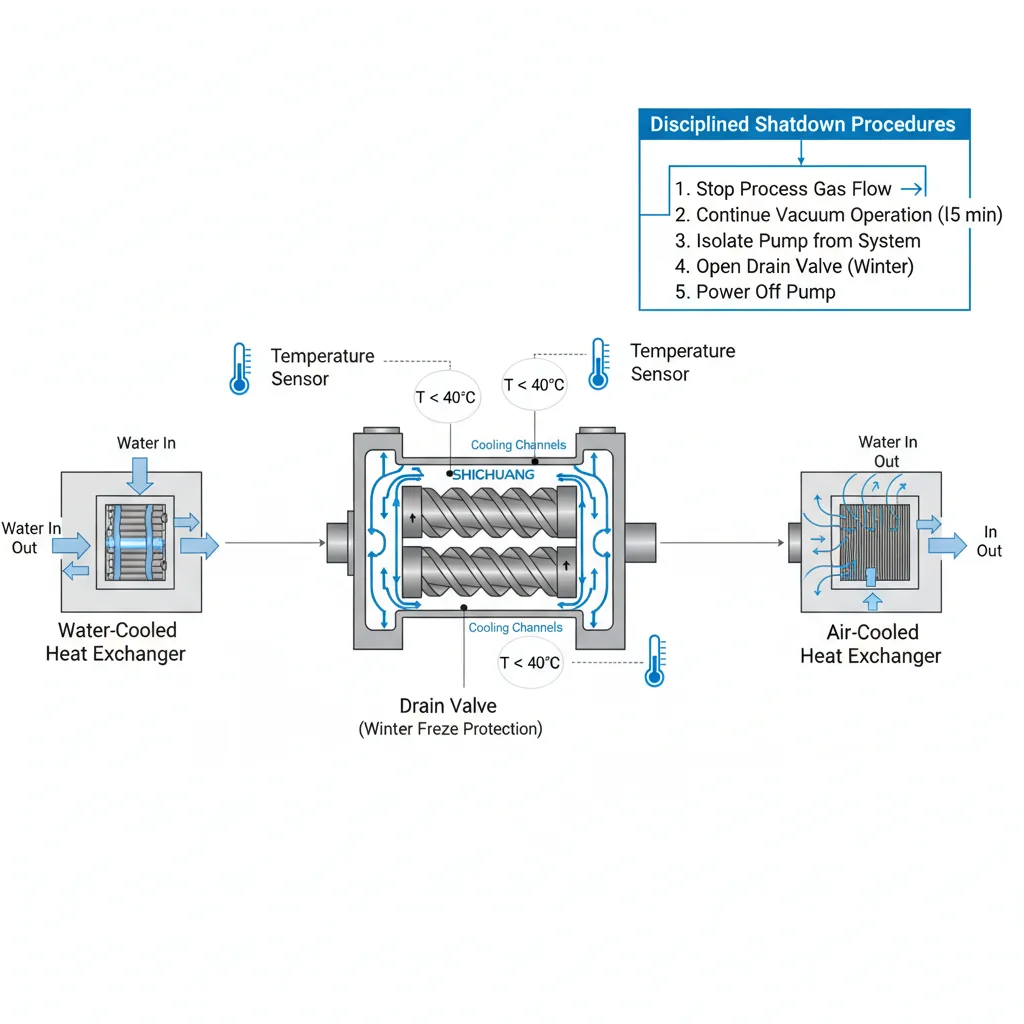
The biggest mistake I see is treating cooling water or airflow as an afterthought. For oil-free screw vacuum pumps, consistent thermal control is mission-critical. High operating temperatures can trigger thermal trips and reduce bearing life—especially if pump body temperature creeps above 40 °C. I always tell customers: monitor the temperature at several points, not just at the outlet. Don’t rely on a single sensor, since local hotspots on the screw rotors or casing can go unnoticed until there’s damage.
From my experience with water-cooled models—especially those above 100 m³/h displacement—scale buildup in heat exchangers7 is a silent killer. Scale can cut cooling efficiency by 20-30%, and I’ve seen it raise casing temperatures by 5 °C or more. The fix? Inspect and flush cooling systems at least every quarter if you’re running 24/7. Also, check that airflow around air-cooled units isn’t blocked by dust or process debris.
For shutdowns, following a strict sequence matters. Let the pump cool below 35 °C before shutting off water, or you risk thermal shock and cracked jackets. During winter, always drain idle units to avoid freeze damage—I’ve watched customers lose entire pump housings in one night. In short, disciplined thermal control pays off in reliability and reduced long-term costs.
Monitoring temperature at multiple points on the screw rotors and casing, rather than relying on a single outlet sensor, is essential to detect local hotspots that can lead to premature bearing failure in oil-free screw vacuum pumpsTrue
Local hotspots often occur due to uneven thermal loads or insufficient cooling in specific areas. Single-point temperature monitoring can miss these critical zones, delaying intervention and increasing risk of thermal damage to bearings and rotors. Multiple sensors enable more precise thermal management and early problem detection.
Using cooling water temperatures above 60 °C is effective for thermal control in oil-free screw vacuum pumps because higher coolant temperatures improve heat exchange efficiencyFalse
Cooling water temperatures exceeding 40 °C reduce the temperature differential between the coolant and pump surfaces, decreasing the cooling efficiency. Effective thermal control requires maintaining cooling water below approximately 40 °C to prevent pump body temperature from rising, which can trigger thermal trips and shorten bearing life.
Key takeaway: Diligent temperature management—including regular inspection, cleaning of cooling systems, and adherence to shutdown protocols—is essential for oil-free screw vacuum pumps. Effective thermal control reduces the risk of overheating, extends component lifespan, and helps avoid costly operational failures or repairs, especially in demanding or variable ambient conditions.
How Should Filtration Be Maintained on Oil-Free Screw?
Inlet filtration on oil-free screw vacuum pumps must be inspected weekly, and more frequently in dusty environments or continuous operations. Dirty or clogged filters reduce pump throughput by up to 30% and accelerate wear. Intake filter silencers8 require regular washing or element replacement; exhaust filters or mist separators must meet manufacturer guidelines and emission standards, especially in sensitive locations.
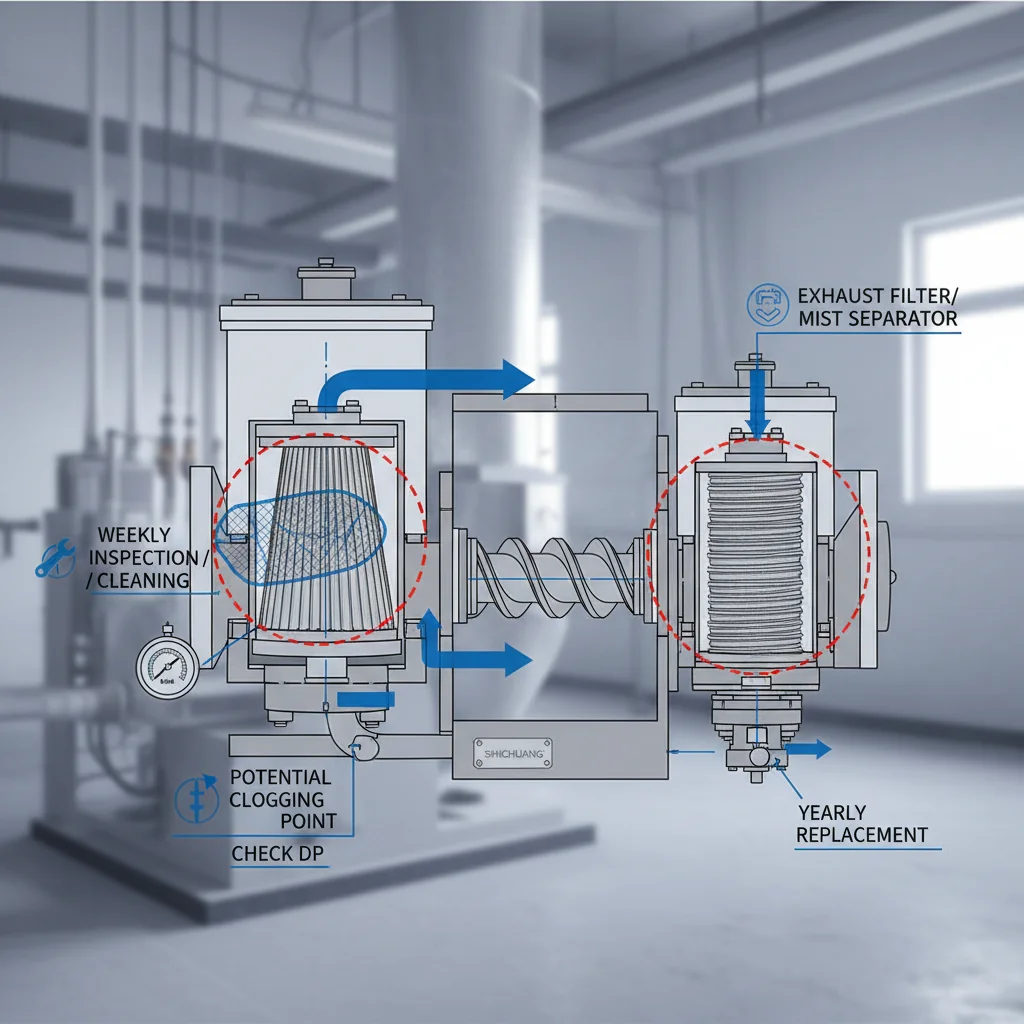
Here’s what matters most when maintaining filtration on an oil-free screw vacuum pump: inlet filters do the hardest work and see the most abuse. Dust, fibers, or even fine powders in the airstream will erode screw rotors and close internal gaps—cutting overall displacement by 20–30%, sometimes more. I’ve seen this in food processing plants running flour or starch lines; weekly filter checks simply weren’t enough, and output dropped fast between cleanings. If your pump operates in a dusty environment or runs around the clock, I recommend inspecting inlet filters every week at minimum—and plan deep cleaning every 1–2 weeks.
For filter silencers using cotton or mesh, take out the element, wash it in clean water, dry thoroughly, and reinstall. If restriction or discoloration remains, it’s time to replace. Many facilities set a pressure-drop limit (such as 2–4 kPa) across the filter to trigger change-out—this is a practical solution if you have the instrumentation. Don’t forget exhaust: mist separators and outlet filters need monitoring, especially when venting into occupied or sensitive rooms. Local standards may set specific particulate or oil mist limits. My advice? Keep the area and exterior clean, too. Less airborne dust means less risk for both your pump and your team.
Inlet filters on oil-free screw vacuum pumps must often be inspected and cleaned multiple times per week in dusty environments, as even brief exposure to fine powders can reduce displacement by over 20% within daysTrue
The high-velocity airstream carries abrasive particles that rapidly erode the screw rotors and close critical internal clearances, causing measurable performance drops if filters aren't maintained with greater frequency than typical weekly intervals.
Oil-free screw vacuum pumps do not require inlet filtration maintenance since the absence of oil prevents rotor wear from dust and particlesFalse
Despite the absence of oil lubrication, abrasive contaminants like dust and fine powders still physically erode rotor surfaces and reduce pump efficiency, making regular inlet filter maintenance essential to prevent displacement losses and premature equipment failure.
Key takeaway: Regular inspection, cleaning, and timely replacement of both inlet and exhaust filters are essential maintenance tasks for oil-free screw vacuum pumps. Proactive filtration upkeep protects internal screw elements, sustains throughput, prolongs equipment life, and ensures compliance with environmental and workplace safety standards.
How to Protect Pumps from Process Gases?
Process gas chemistry dictates vacuum pump maintenance. For humid or condensable vapors, gas‑liquid separators and gas ballast or purge lines are essential. A 5–10 minute nitrogen purge after each batch removes residual vapors, while specifying fluororubber or PTFE seals9 enhances resistance to corrosion. Avoid shared suction lines to prevent accelerated rotor wear and performance loss.
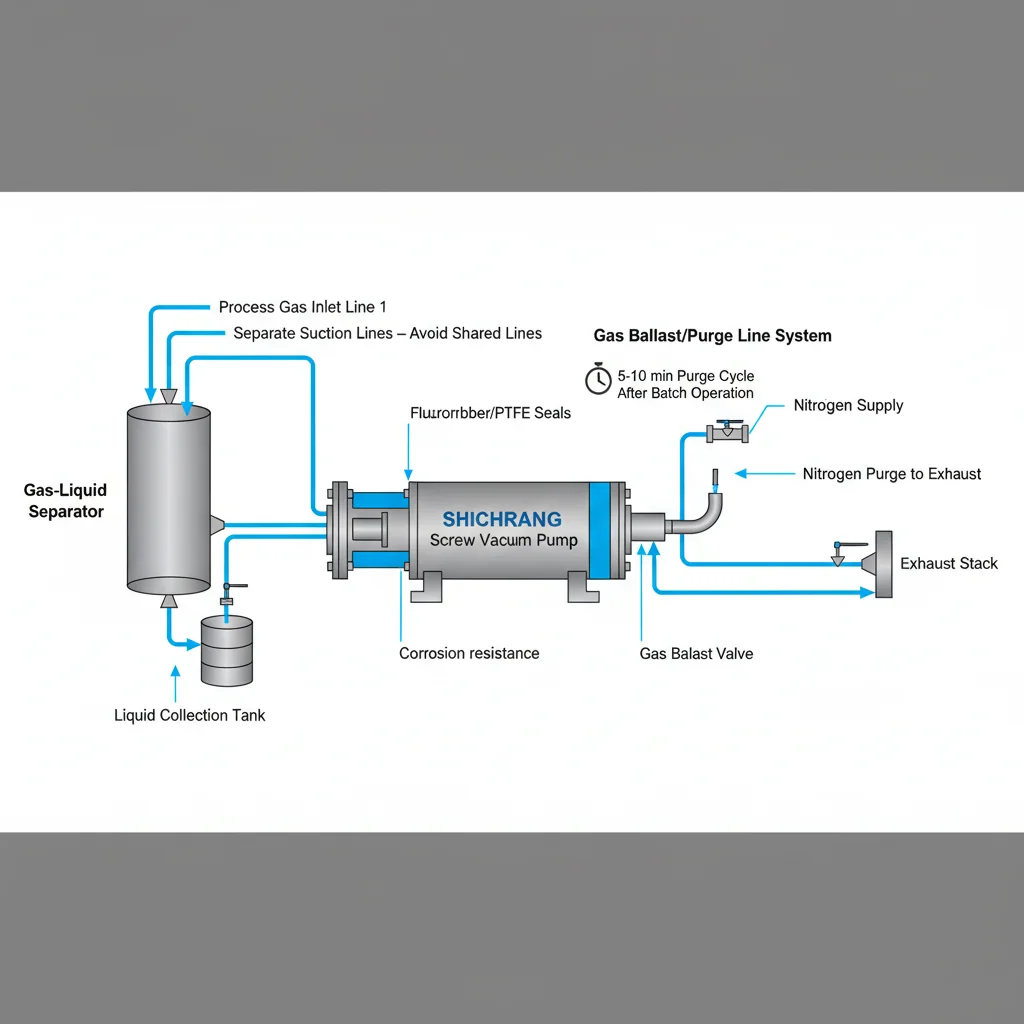
Too many teams overlook how much process gas chemistry changes vacuum pump maintenance. For humid or condensable vapors, I always recommend installing a gas–liquid separator10 at the inlet. This simple upgrade keeps the screw chamber dry and prevents corrosion from water or acid condensate. If your process routinely handles solvent vapor—especially in pharmaceutical or chemical applications—gas ballast or a nitrogen purge line is essential. Purging with nitrogen for 5–10 minutes after each batch flushes out the chamber, removing leftover vapors before they condense or form sticky residues. I've seen this add years to a pump’s service life.
Seal material plays a huge role, too. Standard elastomers start to break down under aggressive chemicals or high vacuum, leading to leaks. Fluororubber or PTFE seals cost about 20% more, but I’ve found they stay reliable even with harsh solvents and at deep vacuum (below 5 Pa). One more tip: avoid connecting dirty and clean processes to the same suction line. Data from a 200 m³/h dry screw project showed about 20% faster rotor wear with shared lines—mainly due to corrosive carryover.
I suggest reviewing your process chemistry and putting in these safeguards. It’s far cheaper than dealing with seized rotors or premature seal failure later on.
Installing a gas–liquid separator before the inlet of an oil-free screw vacuum pump can extend maintenance intervals by preventing acid condensate-induced corrosion within the screw chamberTrue
Gas–liquid separators remove condensable vapors and water droplets from process gases, keeping the pump internals dry and significantly reducing corrosion risk that would otherwise degrade critical components and increase maintenance frequency.
Using a nitrogen purge line in oil-free screw vacuum pumps eliminates the need for regular internal inspections regardless of the process gas compositionFalse
Although nitrogen purging helps prevent contamination and corrosion, it does not replace the need for routine inspections because mechanical wear, seal integrity, and residual contaminants still require regular monitoring for reliable pump operation.
Key takeaway: Effective protection against harmful process gases and vapors requires gas-liquid separation, regular inert purges, compatible seal materials, and dedicated suction lines. These steps significantly reduce wear, corrosion, and costly vacuum pump failures—extending operational life in challenging chemical or pharmaceutical environments.
How Are Bearings and Rotors Maintained?
Bearings and rotors in oil-free screw vacuum pumps demand vigilant lubricant monitoring11 and routine oil or grease changes, especially under harsh conditions. Checking lubricant level, color, and quality can signal seal or coolant ingress issues. Scheduled filter replacement12, vibration analysis, and thermography help detect early wear, minimizing costly rotor and bearing damage from neglected maintenance or abnormal operating signs.
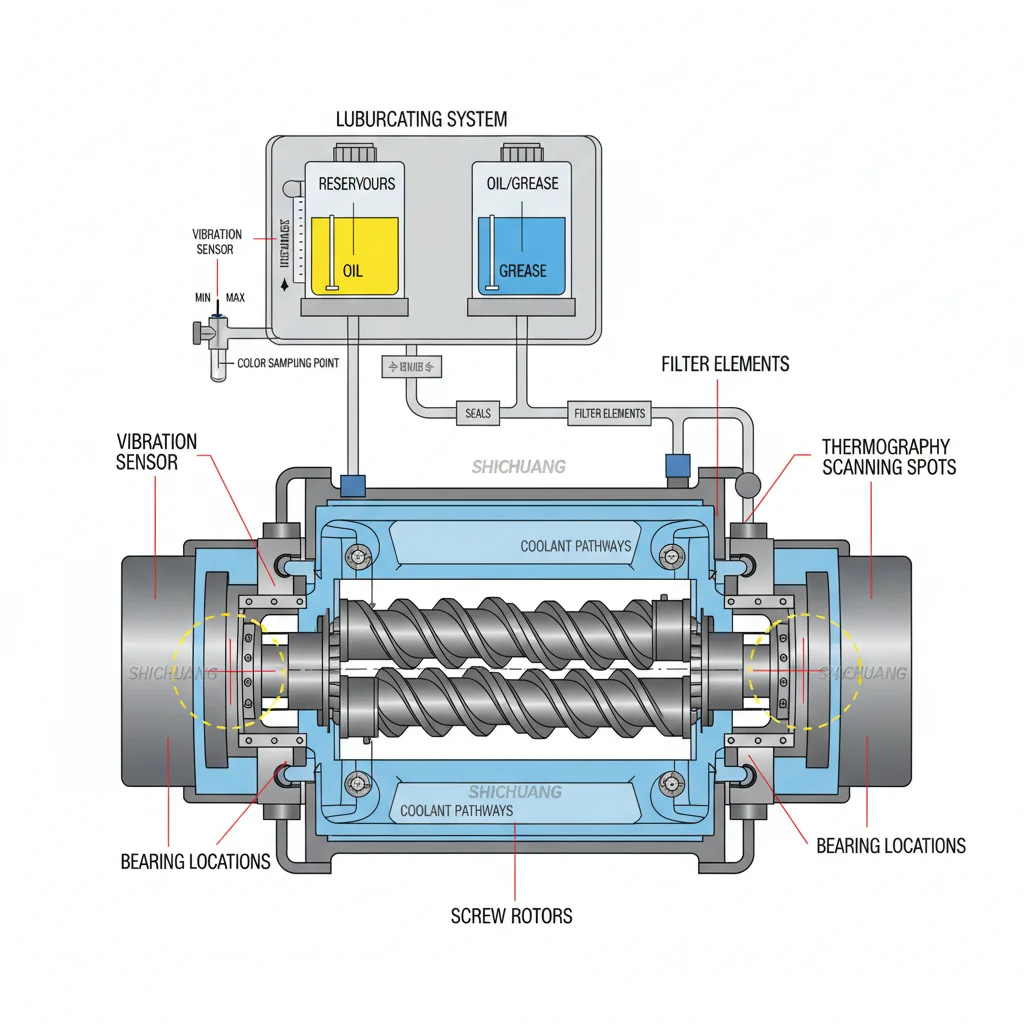
To be honest, the spec that actually matters for long-term reliability isn’t just rotor design—it’s how well the bearings and rotors are maintained during real production. Oil-free screw vacuum pumps have oil-free compression chambers, but the bearings and gearboxes still rely on proper lubrication for smooth, low-wear operation. I always suggest inspecting lubricant level, color, and clarity every week. If you notice the oil turning milky or find you’re topping up much more than usual, that often means seal wear or coolant ingress—issues that can rapidly destroy bearings if ignored. In demanding settings like electronics coating or chemical recovery, I see maintenance teams changing oil or high-temperature grease about every 2–3 months and measuring for significant changes in viscosity and acid value. Filters in the lubrication circuit (if your model has them) should be replaced on schedule—typically after 2,000 to 3,000 running hours—to avoid abrasive damage from particulates. Rotors themselves, if bearings and seals are looked after, can easily reach 40,000–60,000 hours before reconditioning. Annual vibration analysis and surface thermography are smart investments; they uncover early signs of imbalance or overheating that you might miss by ear alone.
Weekly inspection of lubricant color and clarity in the gearbox of oil-free screw vacuum pumps can detect early signs of water ingress, which if not addressed may cause bearing corrosion and premature failureTrue
Oil turning milky is often an indicator of water contamination in the lubricant, signaling potential seal leaks or condensation issues. Early detection through regular visual checks allows for timely maintenance to prevent bearing damage and extend pump life.
Since oil-free screw vacuum pumps have no oil in any part of the system, their bearings and gearboxes do not require any lubrication maintenanceFalse
Although the compression chamber is oil-free, the bearings and gearboxes still require proper lubrication to operate smoothly and avoid wear. Neglecting lubrication maintenance leads to increased friction, heat, and eventual mechanical failure.
Key takeaway: Consistent lubricant checks, timely oil or grease changes, and monitoring for unusual vibrations or noises are essential for prolonging rotor and bearing life in oil-free screw vacuum pumps. Proactive maintenance prevents expensive failures, reduces unscheduled downtime, and extends equipment service intervals in demanding industrial environments.
How Should Oil-Free Screw Pumps Be Serviced?
Annual service of oil-free screw vacuum pumps should include rotor clearance checks13, alignment verification, and bearing inspections, especially in demanding sectors. OEMs recommend a 4–5 year major overhaul, costing about 15% of the initial price. Structured preventive maintenance14—including filter cleaning, cooling flushes, and bearing monitoring—dramatically reduces unexpected downtime and protects investments in specialized pump components.
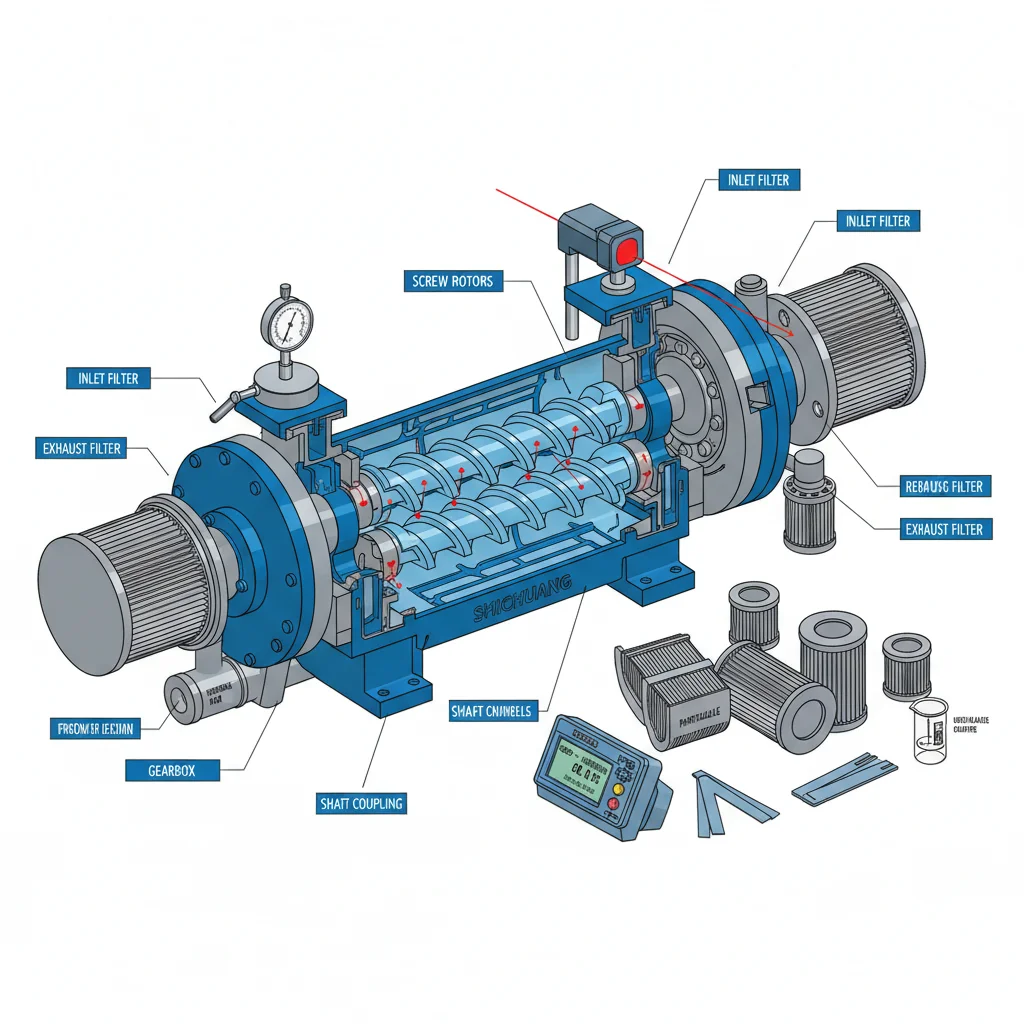
Many teams ask me, “How often should oil-free screw pumps actually be serviced?” The answer depends on your process and how critical vacuum downtime is. At minimum, annual service should include checking rotor clearances (since even a 0.02 mm drift can affect volumetric efficiency), verifying shaft alignment, and inspecting the mechanical seals and bearings. In chemical plants, I’ve seen seal degradation cut bearing life in half if teams ignore early vibration or temperature changes. That's why some electronics manufacturers monitor bearing temperatures every six months on 24/7 lines.
Beyond yearly checks, preventive routines matter. A typical program covers monthly filter cleaning, quarterly cooling water flushes (to prevent fouling in the cooling jackets), and annual alignment and vibration trending. The cost? Industry data suggests budgeting about 1% of your initial pump price per year for parts and service. Expect a major overhaul every 4–5 years, with new bearings, seals, and sometimes screw surfaces—usually 15% of the original equipment cost.
To maximize MTBF (Mean Time Between Failures), schedule maintenance before efficiency drops or vibration rises. I always suggest documenting each cycle—when you notice a gradual pressure loss, it's often the first hint something’s wearing out. Disciplined PM can reduce unplanned stoppages by as much as 80%. In the long run, it’s the best way to protect your investment.
A rotor clearance drift as small as 0.02 mm in oil-free screw vacuum pumps can reduce volumetric efficiency significantly, necessitating precise annual measurement.True
Rotor clearance directly affects the internal leakage and compression ratio within the pump; even minimal increases around 0.02 mm lead to measurable efficiency losses, making tight tolerance checks critical during servicing.
Oil-free screw vacuum pumps do not require inspection of mechanical seals during routine service since they operate without oil lubrication, preventing seal wear.False
Despite operating oil-free, oil-free screw pumps have mechanical seals exposed to the process gas and operating conditions that can degrade them. Ignoring seal inspections can lead to seal failure, increased vibrations, and premature bearing wear.
Key takeaway: Proactive, scheduled maintenance and adherence to overhaul intervals are essential for maximizing oil-free screw vacuum pump reliability and service life—especially given the specialized bearings and seals used. Disciplined preventive maintenance can reduce unplanned downtime by up to 80% and is the most cost-effective way to safeguard pump performance and minimize lifecycle costs.
How Do Setup Choices Affect Pump Maintenance?
Selection and installation directly affect oil-free screw vacuum pump maintenance needs. Correctly sizing pumps for gas type, flow, and pressure prevents overload and cycling. Incorporating gas-liquid separators15 and easy-access designs16 reduces servicing time by up to 30%. Placing pumps in clean, ventilated areas extends component life, and obtaining OEM maintenance schedules from the outset prevents unplanned downtime.
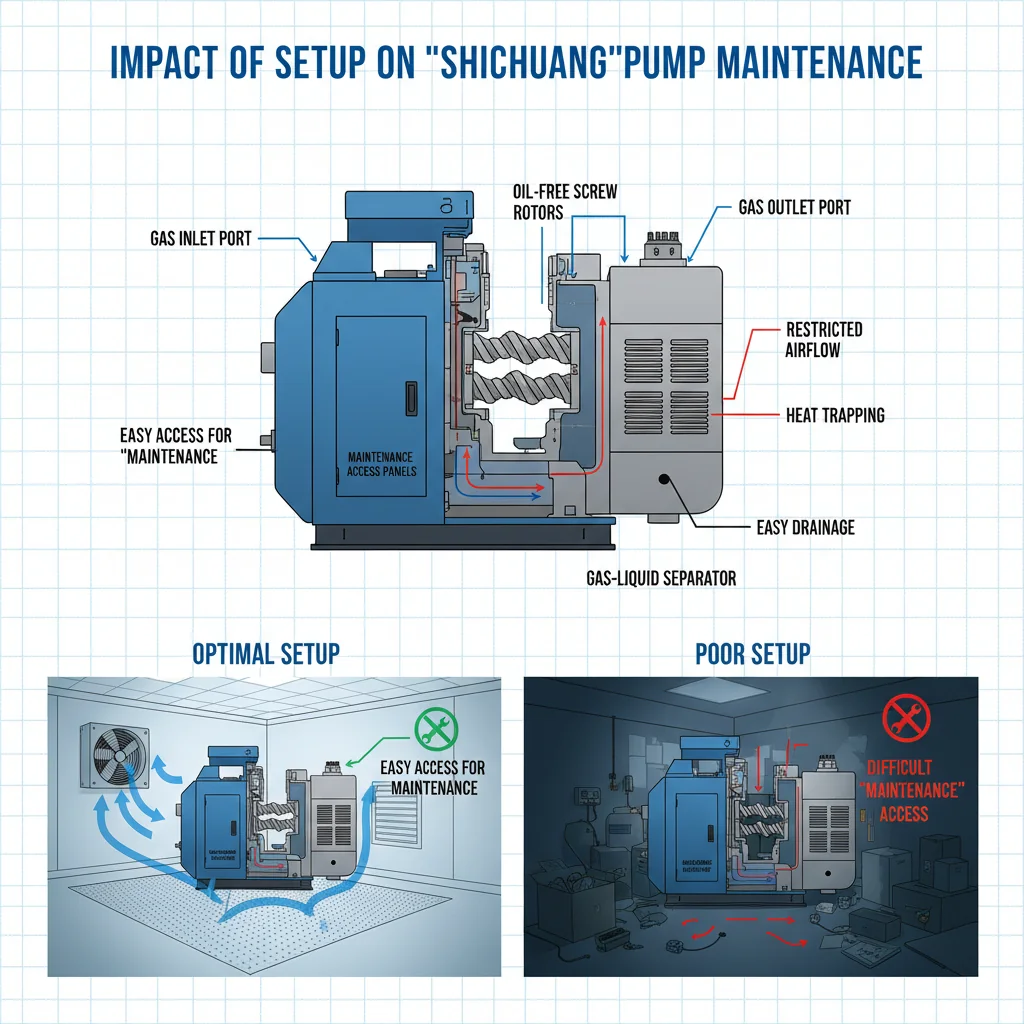
One thing I see too often—teams underestimate how setup impacts long-term maintenance for oil-free screw vacuum pumps. Proper selection starts with matching the pump’s rated displacement to actual process flow at the real working vacuum, not just relying on ultimate pressure from a spec sheet. If you undersize, the pump can continuously cycle, increasing wear on components like screw rotors and mechanical seals. Oversizing isn’t better—it leads to inefficient operation and wasted energy, especially when the displacement is far above your demand.
For humid or variable loads, always plan for options like a gas-liquid separator or purge line. These additions tackle condensate that would otherwise cause corrosion or fouling inside the screw chamber. Pumps designed with easy-access panels and external filters reduce service time significantly; in my experience, maintenance tasks can be up to 30% faster compared to traditional closed-chassis layouts.
Location matters just as much. I suggest keeping pumps away from direct heat or heavy particulate zones—good ventilation extends MTBF (Mean Time Between Failures) for seals and gears. Before installation, ask for the OEM’s recommended maintenance intervals and a complete spare parts list. That single step can prevent long lead times or “parts roulette” surprises down the road. Careful setup delivers real benefits—in reliability and in total cost of ownership.
Selecting a pump with rated displacement within 10-15% of the actual process flow at working vacuum minimizes mechanical seal wear by reducing unnecessary cyclingTrue
Undersized pumps cycle on and off frequently, causing thermal and mechanical stress on seals and rotors. Matching rated displacement closely to real process conditions stabilizes operation, extending component lifespan. A 10-15% margin allows for operational variability without excessive cycling.
Oversizing an oil-free screw vacuum pump by 50% always improves pump efficiency and reduces energy consumptionFalse
Oversizing significantly beyond process requirements leads to inefficient operation due to reduced volumetric efficiency and increased internal leakage. This causes wasted energy and may increase wear rather than improve efficiency, contradicting the misconception that bigger pumps automatically save energy.
Key takeaway: Careful pump selection, proper installation, and a controlled environment dramatically reduce oil-free screw vacuum pump maintenance and failure risk. Prioritize appropriate sizing, auxiliary components, and accessible layouts for maximum reliability and service life, and always obtain OEM support materials before commissioning equipment.
What Safety Steps Ensure Compliant Maintenance?
Compliant maintenance of oil-free screw vacuum pumps requires strict adherence to safety measures such as lockout/tagout (LOTO) before accessing internal components, confirming full shutdown and safe temperatures, and using only manufacturer-approved parts. Regularly testing over-temperature cutoffs, interlocks, and exhaust abatement systems ensures ongoing safety and compliance with CE, ISO, and occupational health regulations.
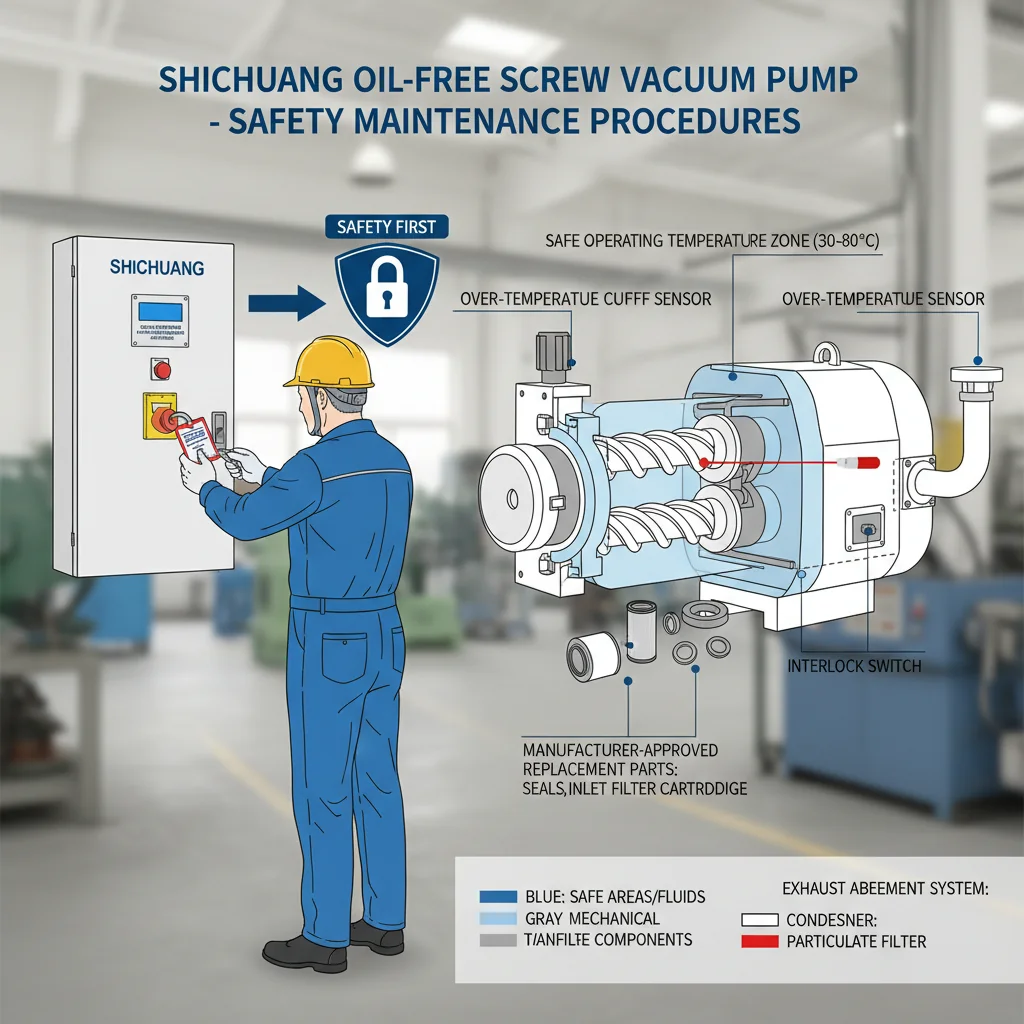
In maintenance, shortcuts can lead to real risks—not just for equipment, but for people. I always advise teams to treat oil-free screw vacuum pumps with the same discipline as any high-energy rotating machine. Even a “quick” check on an inlet filter can expose you to hot surfaces or unexpected startups if lockout/tagout (LOTO) isn’t done first. Before accessing panels or internals, always verify the pump is fully isolated from power, has stopped moving, and has cooled to below 40°C. Using non-approved gaskets, filters, or seals might look like a time-saver, but I’ve seen it backfire—leading to leaks, subpar vacuum levels, or failed CE audits due to material compatibility issues. Here are the safety steps I suggest making routine: - Apply lockout/tagout procedures on every intervention—even rapid maintenance tasks. - Confirm pump shutdown and temperature (under 40°C) before touching any hot piping, rotor, or gas path. - Use only manufacturer-certified spare parts17, filters, and lubricants to preserve compliance and technical performance. - Test all interlocks and over-temperature trips at least quarterly; log results to pass safety audits. - Check exhaust abatement and filtration meet workplace and environmental standards—especially if you exhaust to indoor or clean zones.
Lockout/tagout procedures for oil-free screw vacuum pump maintenance must ensure power isolation and that the pump’s rotors have fully stopped rotating, as residual momentum can cause sudden internal movement even after power is cutTrue
Unlike some simpler machinery, the rotors inside screw vacuum pumps can continue spinning for several seconds due to inertia after power loss; failing to confirm complete stop risks injury from unexpected rotating parts.
Oil-free screw vacuum pumps can be safely inspected while running if the inlet filter is only partially clogged, as the pump’s design prevents any risk from hot surfaces or sudden startups during minor maintenanceFalse
Regardless of the filter condition, accessing any internal or panel components without full lockout/tagout exposes personnel to hazards like hot surfaces and unexpected startups, making in-operation inspection unsafe and non-compliant with safety standards.
Key takeaway: Strict safety and compliance protocols—like LOTO procedures, manufacturer-approved components, and regular interlock testing—are essential when maintaining oil-free screw vacuum pumps. Consistent adherence reduces personnel risk, liability, and the chance of costly compliance failures or unplanned shutdowns resulting from failed audits.
Conclusion
We've explored the essentials of maintaining oil-free screw vacuum pumps—rotors, bearings, cooling, and filtration—to help you avoid unexpected downtime and extra costs. From my experience, it's often the overlooked details—like bearing lubrication type and cooling configuration—that separate smooth operators from constant headaches. Before something goes wrong, I suggest you review your pump’s subsystem specs and set up a simple inspection plan tailored to your application, not just the default alarms. If you have questions about real-world maintenance strategies or want to compare what works best for your process, feel free to reach out. Every facility is different—choose what actually works for your production needs.
References
-
Detailed guidance on maintaining inlet filtration to prevent wear and maintain pump efficiency, crucial for continuous and dusty operations. ↩
-
Explore how maintaining tight rotor clearances under 0.1 mm ensures efficiency and prevents mechanical failures in vacuum pumps. ↩
-
Learn how 5-micron filter elements protect vacuum pump rotors from dust, extending equipment lifespan and reducing downtime. ↩
-
Learn how regular inspection of inlet filters prevents flow rate drops and maintains pumping speed, ensuring stable vacuum and extended pump life. ↩
-
Explore how infrared thermometers help detect temperature rises for early fault diagnosis and maintaining pump reliability in industrial settings. ↩
-
Explains how high temperature triggers thermal trips, affecting pump reliability and how to prevent costly downtime with proper thermal management. ↩
-
Details how scale buildup reduces cooling efficiency by 20-30%, leading to temperature rise and potential damage, with inspection tips for maintenance. ↩
-
Explains washing, replacement, and monitoring practices of filter silencers to ensure optimal pump performance and emission compliance. ↩
-
Details the superior chemical resistance and durability of fluororubber and PTFE seals under harsh solvents and deep vacuum, avoiding leaks and failures. ↩
-
Explains how gas–liquid separators prevent corrosion and water damage in pumps handling humid or condensable vapors, prolonging pump life. ↩
-
Explains how vigilant lubricant monitoring prevents bearing failure, ensuring pump reliability and reducing maintenance costs in harsh environments. ↩
-
Details the timing and benefits of filter replacement to avoid abrasive damage and prolong vacuum pump gearbox and bearing life. ↩
-
Detailed guidance on rotor clearance impacts on pump efficiency and how small drifts affect performance, essential for maintenance planning. ↩
-
Comprehensive overview of preventive routines like filter cleaning and bearing monitoring that reduce downtime and extend equipment life. ↩
-
Detailed insights on how gas-liquid separators prevent corrosion and fouling, extending pump life and reducing downtime. ↩
-
Explains how easy-access panels and external filters increase service efficiency by up to 30%, reducing maintenance time. ↩
-
Insight into how using approved parts preserves pump integrity, compliance with standards, and prevents failures, vital for reliable operation. ↩