
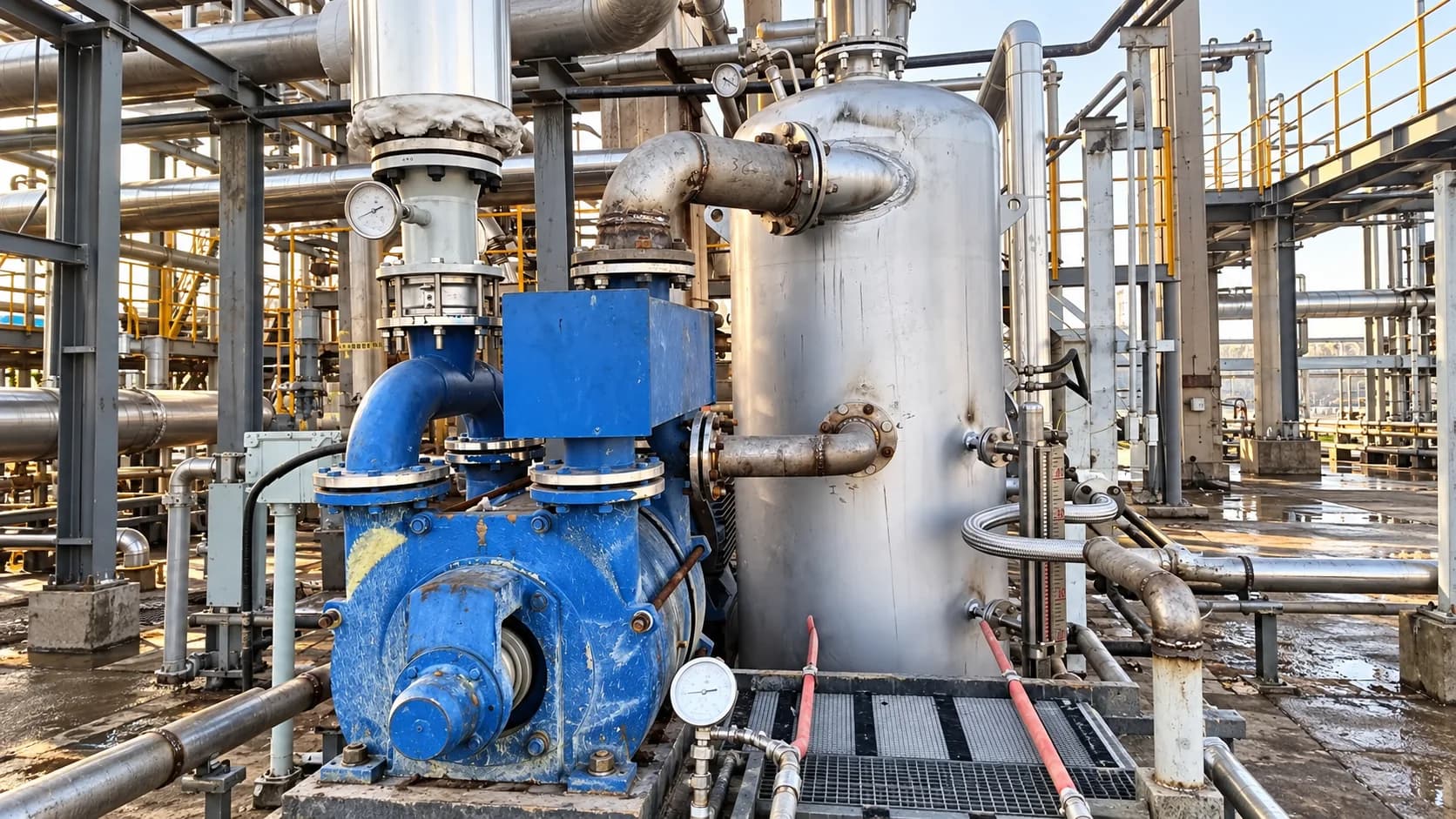
A dry screw replacement review is worth starting when a continuously operated water-ring system has high electricity or water demand, loses vacuum stability as summer water temperatures rise, or requires recurring work to manage scale, blocked passages, seal changes, wastewater, or environmental controls. If the process also needs a higher vacuum level or tighter vacuum stability to keep production consistent, we then check whether a dry screw package can meet the duty without a circulating-water loop. That assessment depends on the actual operating point, inlet stream, system boundary, and installed configuration.
In this article, water ring vacuum pump and liquid ring vacuum pump describe the same pumping principle when water is the sealing liquid. We use the water-ring term because it is common in replacement inquiries. This is a focused replacement guide for industrial buyers deciding whether to begin a dry-screw review; it does not attempt to rank the two technologies for every application.
We begin a replacement discussion with working pressure and required volumetric flow rate. These two values are enough for the first RFQ. During follow-up, we review the actual gas or vapor, liquid carryover, solids, corrosion risk, cooling and sealing-water arrangement, discharge route, duty cycle, and installed piping. This article explains when to begin that review, why a direct exchange may not work, and which details support the next decision.
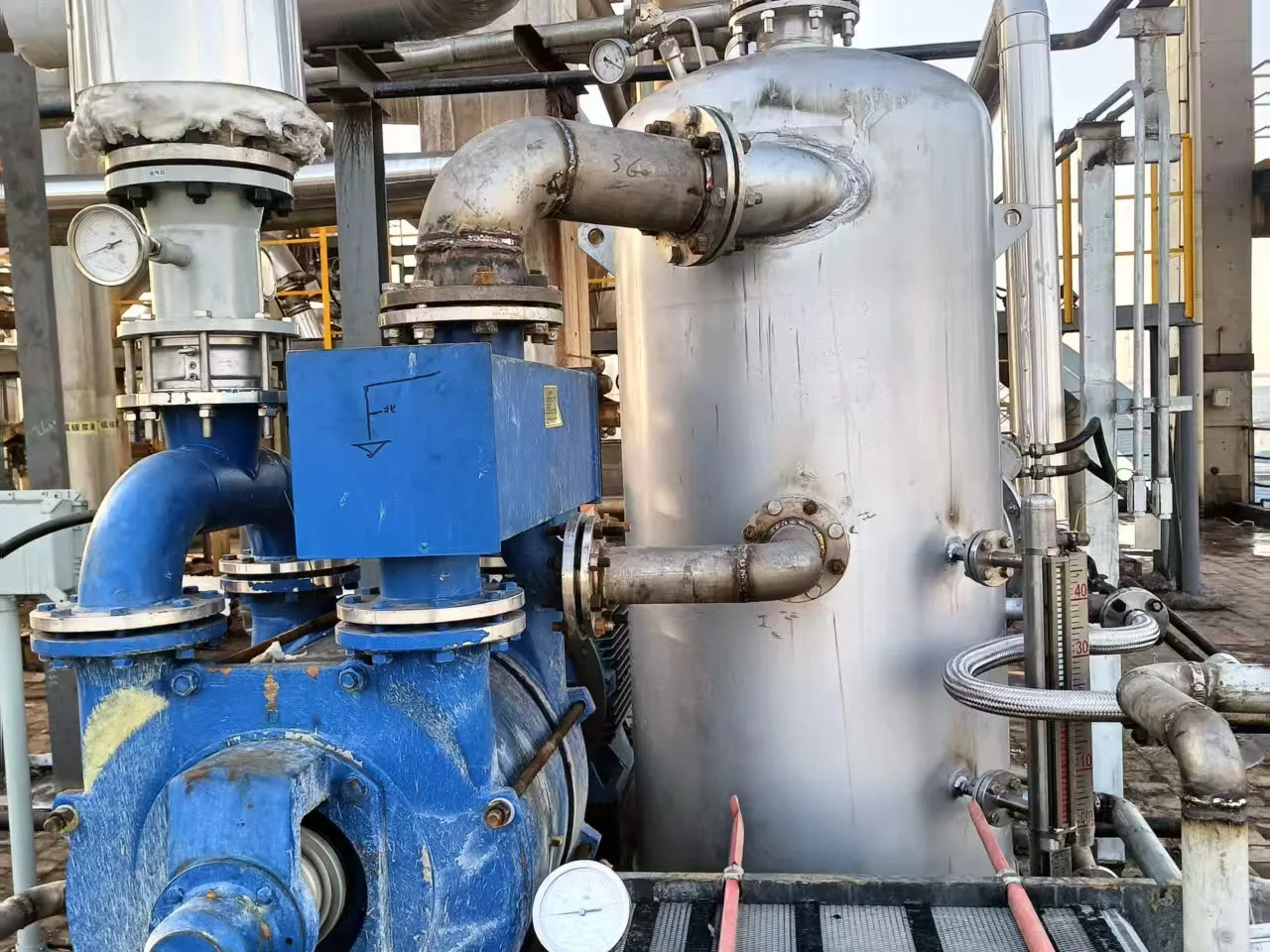
When Should You Consider Replacing a Water Ring Vacuum Pump?
Consider a dry screw replacement review when a recurring operating issue affects production, day-to-day operating work, or the system's ability to hold the required vacuum level. We first establish whether the issue is part of the current duty and system arrangement before assessing a dry screw alternative.
The operating concern tells us where to look; the process conditions determine whether a change is appropriate. A water-ring unit may be integrated with sealing water, cooling water, a separator, a liquid loop, discharge handling, and the operating routine. We begin by confirming what the process requires at the working pressure and required volumetric flow rate, then review whether a dry screw package can support that duty.
To turn an operating concern into a useful replacement review, we check:
- Repeated operating burden. Confirm that the electricity, water, maintenance, wastewater, or vacuum-stability issue recurs under normal production conditions.
- Effect on the process. Identify whether vacuum variation, cleaning stops, or the current vacuum level is affecting process consistency, capacity, or the operating routine.
- Current operating duty. Confirm the working pressure, required volumetric flow rate, duty cycle, piping condition, and leakage boundary before defining replacement capacity.
- Inlet stream. Review gas or vapor, liquid carryover, solids, corrosion risk, and inlet temperature before confirming the inlet-protection and package arrangement.
- Connected system. Map the cooling, sealing-water, drainage, discharge, treatment, and control arrangements before changing the pump technology.
This follows the wider engineering view that vacuum selection depends on process temperature, volatility, gas composition, and contamination sensitivity, together with the connected system design. AIChE explains how these variables affect vacuum-technology selection.1
Check the current operating condition
In our sales experience, a water ring pump's volumetric efficiency can decline over its service life. An older installation may therefore operate differently from the condition described in its original technical requirement.
The old model, original data sheet, and historical energy record are useful starting references. We then check the present operating duty before comparing technologies. That keeps the review tied to current performance and shows which measurements or system conditions need follow-up before a dry screw selection.
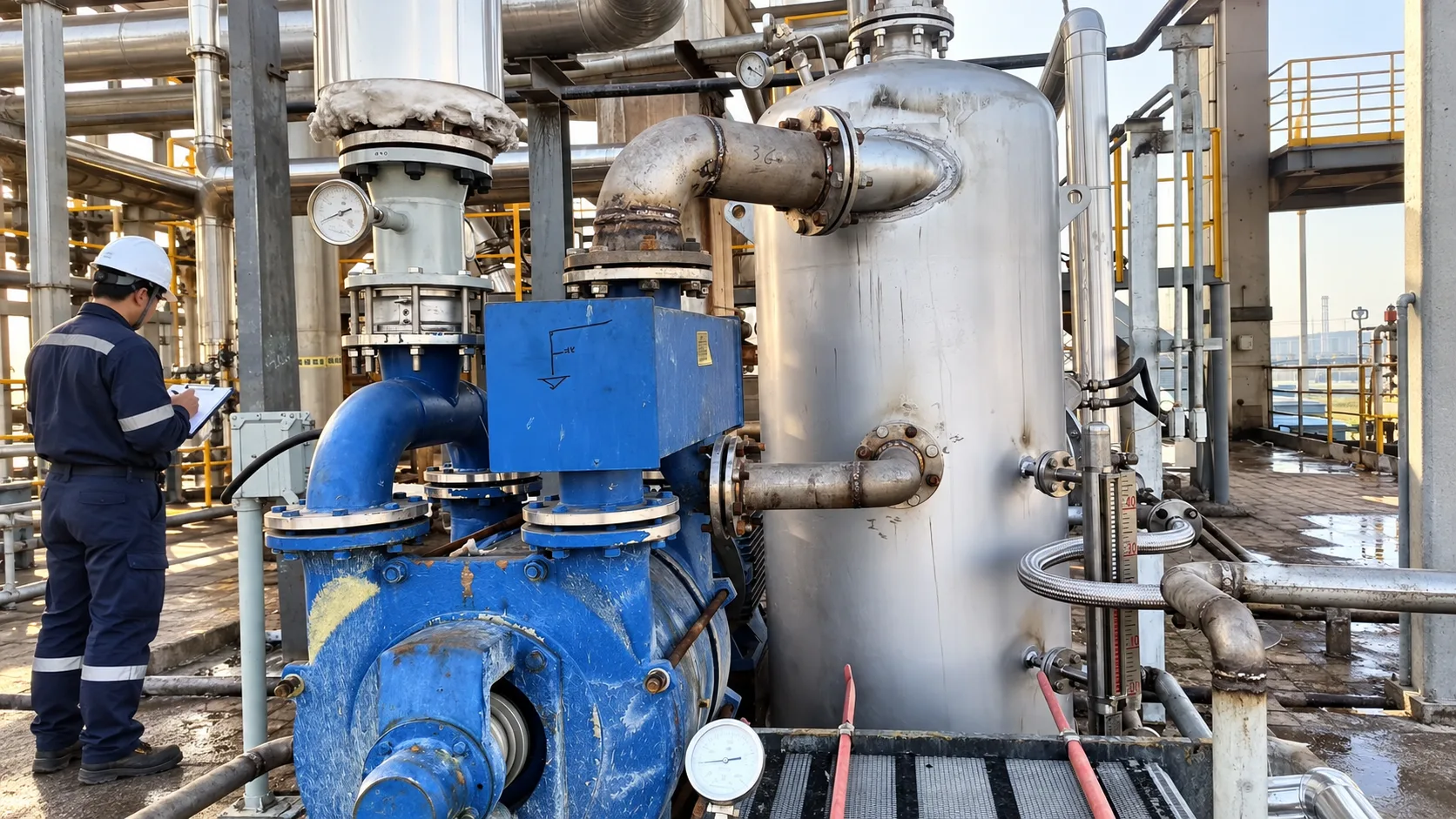
What Must Be Compared Before a Water Ring to Dry Screw Replacement?
We compare the actual operating point, inlet stream, and connected system before assessing a water ring to dry screw replacement. This keeps the discussion tied to the duty the process requires and the package conditions it creates.
The first two inputs are enough to begin a review. The remaining details show how the pump package and connected system need to be assessed.
| Review item | Why it changes the replacement discussion | What to send or confirm |
|---|---|---|
| Working pressure | Sets the pressure point where the process needs vacuum. | Expected value, units, and absolute/gauge basis if known. |
| Required volumetric flow rate | Shows the gas volume that must be handled at that pressure point. | Required value, units, and whether it is based on the current system or process design. |
| Gas or vapor condition | Vapor, corrosion, reaction risk, and temperature can change the package review. | Process-gas description, known vapor, composition, and temperature. |
| Liquid carryover and solids | Droplets, slugs, fine particles, and residue can change separation, filtration, drainage, and cleaning requirements. | Whether they can reach the inlet, when they occur, and any known liquid or solid properties. |
| Cooling, sealing water, and discharge | The existing water and discharge arrangements can affect the replacement package. | Existing water loop, cooling utilities, discharge route, expected backpressure, and treatment requirements. |
| Duty cycle and installed system | Continuous and cyclic duties create different thermal, control, and maintenance requirements. | Operating schedule, current pump model, piping information, and known site restrictions. |
The existing water ring pump gives us useful context on the installed layout and operating routine. We use that information with the current process demand, then check the piping, inlet protection, utilities, and discharge route before recommending a dry screw package.
Review the inlet stream before the package
Clean, dry, stable gas needs a different review from a stream that includes condensable vapor, droplets, solids, or corrosive components. A dry screw pumping chamber operates without sealing liquid and relies on controlled clearances, so the inlet condition affects the package around it.
For a wet or difficult duty, we define the inlet condition before deciding on the configuration. Depending on the confirmed stream, the review may cover separation, filtration, drainage, materials, seals, cooling, purge arrangements, piping, and discharge treatment.
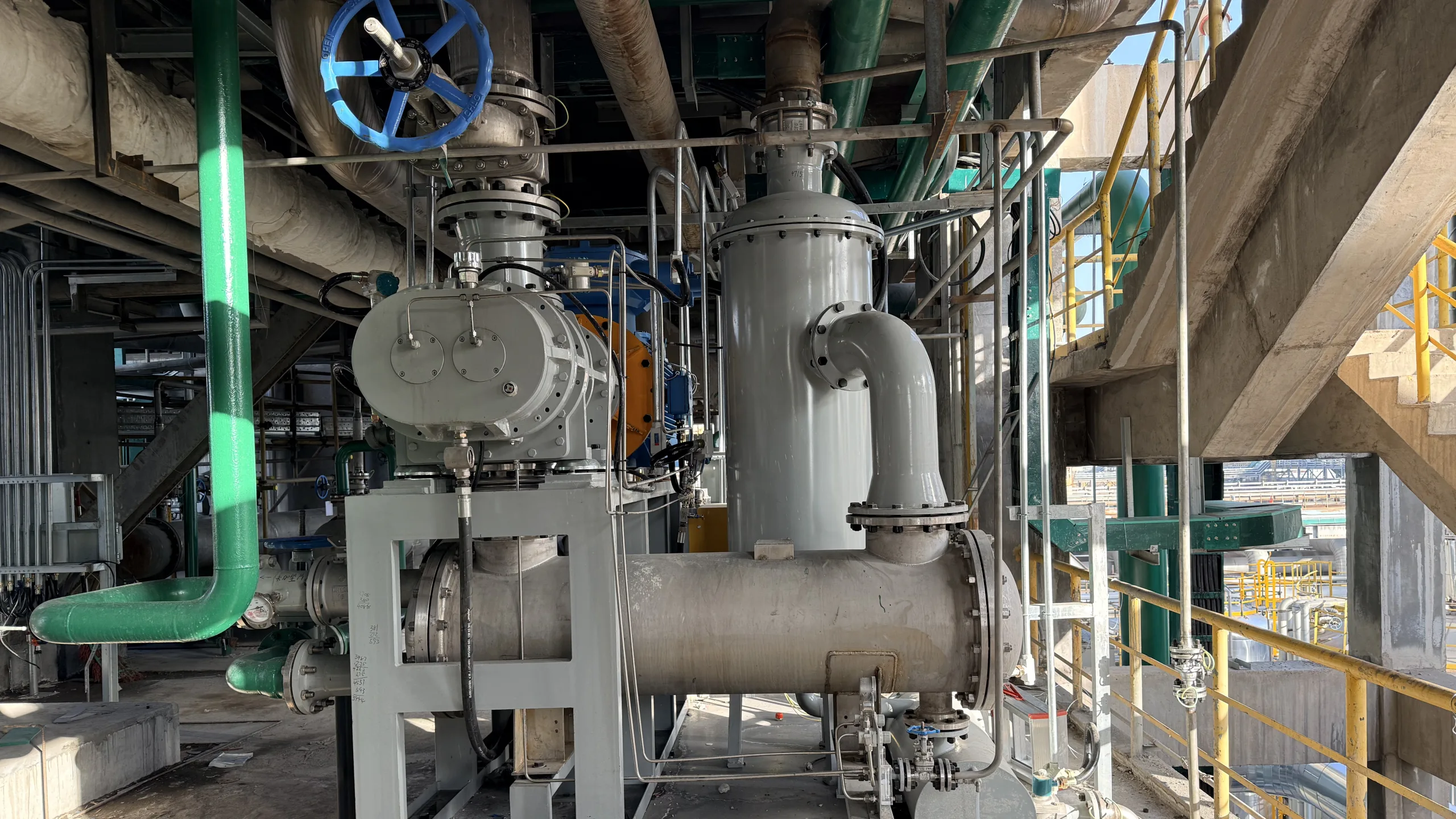
What Conditions Support a Dry Screw Review?
A dry screw option can move forward when the operating point, inlet condition, and connected system have been reviewed together. We use those checks to see whether the duty can be met, what the inlet requires, and which parts of the present system would change.
- Operating point. Confirm the working pressure, required volumetric flow rate, duty cycle, and piping boundary before selecting pump capacity.
- Inlet condition. Gas or vapor, liquid carryover, solids, corrosion risk, and inlet temperature determine the separation, filtration, drainage, materials, and other protection the package may require.
- System boundary. Check how cooling, sealing water, drainage, discharge treatment, backpressure, and controls would change with the proposed arrangement.
Depending on the confirmed process, the package may need inlet separation, filters, a drain path, specific process-contact materials, cooling, purge arrangements, or an exhaust solution. The configuration follows the actual duty and connected system.
TF238 phosphogypsum dewatering project reference
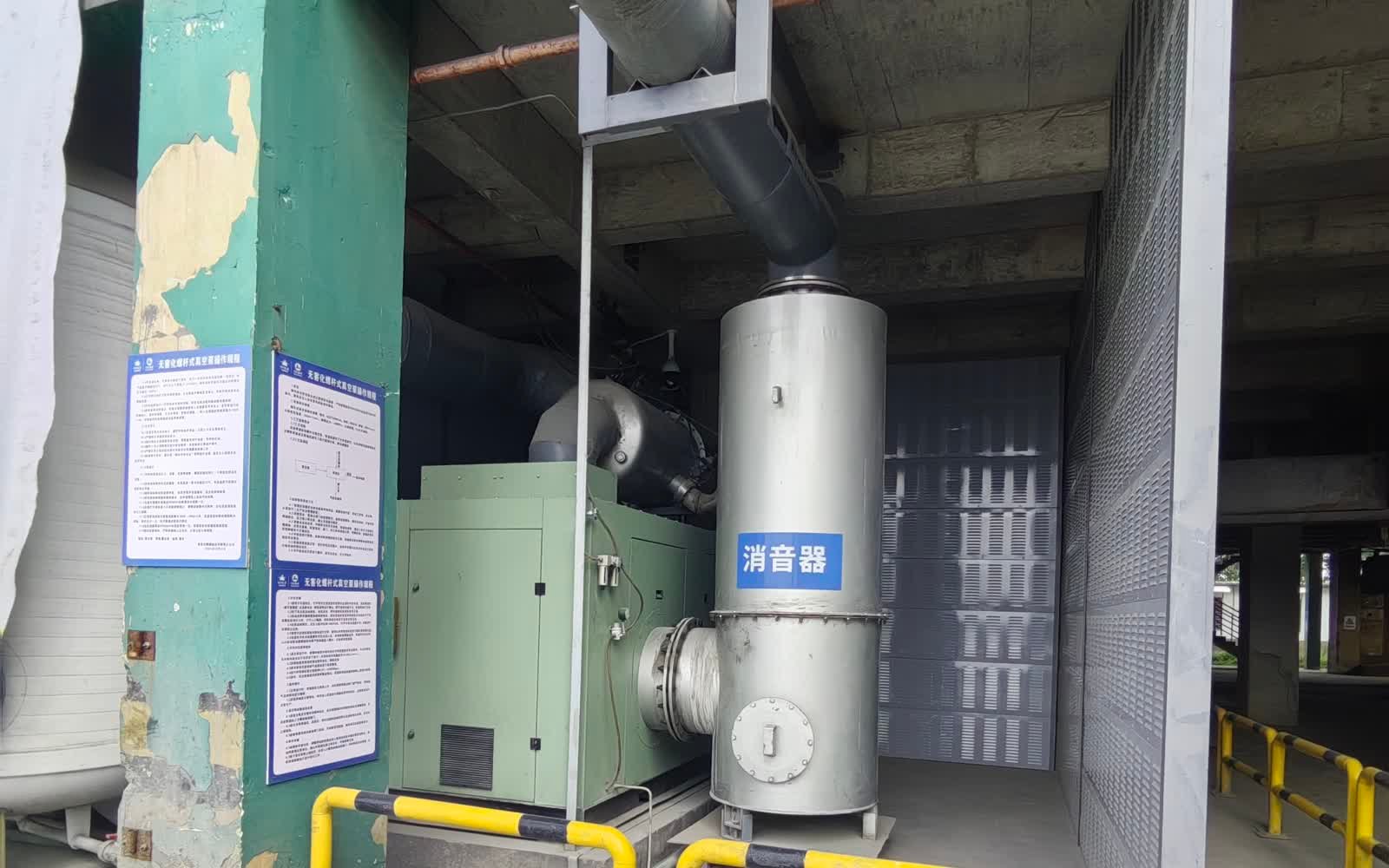
This TF238 phosphogypsum dewatering project shows why a water-ring replacement review can extend beyond the pump itself. In May 2025, Zhejiang Kelexi Power Equipment Co., Ltd. supplied one TF238 dry screw vacuum pump for a phosphate chemical plant in Nanzhang, Hubei, China, as part of a production-line expansion. SC Air Power Tech presents this parent-company project reference for overseas buyers evaluating a similar duty.
The vacuum duty was dewatering on a vacuum belt filter. The confirmed operating point was 30,000 Pa(a) with a required volumetric flow rate of 183 m³/min. The previous system used two 2BEC60 water ring vacuum pumps on one line. Because the process gas could include acidic liquid and fine particles, the package included a vacuum buffer filter tank and inlet filter, an exhaust silencer, and SS316 process-contact parts.
This project also provides a customer-reported power comparison. On this production line, the previous two-pump water-ring system used about 500 kW, while the TF238 operated at about 135 kW; its theoretical power is 185 kW. Using the customer's own electricity-cost calculation, the estimated annual saving was nearly RMB 2.2 million, with the purchase cost recovered in about one year. These figures belong to this production line and are detailed in the TF238 phosphogypsum dewatering case study. For another duty, we review the process conditions to determine the protection, materials, and discharge arrangement required.
When Is a Direct Replacement Not Appropriate?
A one-to-one replacement should wait until we understand the current duty, the process boundary, and the installation limits at the site. If any of these remain open, we start by reviewing the system data rather than selecting a dry screw pump from the old water-ring model.
The following situations call for that wider review:
- The operating point is unclear. We need the current working pressure, required volumetric flow rate, duty cycle, piping condition, and leakage boundary. An old model number cannot show how the system is operating today.
- Carryover behavior is unclear. The inlet may contain droplets, solids, corrosive liquid, condensable vapor, or residue from shutdown. Before we assess the pump chamber and package, we need to know how much reaches the inlet, when it occurs, and how the line separates and drains it.
- The water and discharge loop has not been mapped. Sealing water, cooling, process liquid, effluent handling, and discharge treatment may all be connected in the existing system. Changing one part can affect the others.
- The required materials or protection are still open. Materials, seals, purge, cooling, inlet protection, exhaust treatment, and controls are confirmed against the duty. They need to be settled as part of the selection work.
- The comparison is based on one figure. A nameplate capacity, nominal motor rating, or one energy reading is useful background, but it does not show whether the old and proposed systems are operating under comparable conditions.
- The existing layout must remain. Customers may need to retain the present footprint, foundations, piping route, electrical or control interfaces, and maintenance access. We check the package and its connections against those limits before treating the change as a direct exchange.
- Only one unit has a problem in a multi-pump system. Where several water-ring pumps share a header, duty, or control sequence, we first check load sharing and standby capacity. Replacing one unit can change the operating balance of the remaining system.
These points do not rule out a dry screw option. They identify the information we need before deciding whether it fits the duty. NIST's vacuum-system guidance explains why connection size, bends, and pipe length can affect the pumping speed available at the chamber through conductance.2 We therefore review the piping and connected equipment with the pump package.
What Can an Existing Water Ring Pump Tell You About a Replacement?
The existing water ring pump helps us understand the current installation. Its model, connection size, utilities, operating pattern, and maintenance history give us useful starting points for the review. They do not, on their own, identify the dry screw model or package.
Send the old pump model if it is available. We use it to understand the arrangement and shape the next questions, then compare its stated capacity with the current working pressure and required volumetric flow rate. We also check whether the inlet stream, water arrangement, or discharge route has become part of the process requirement.
Service history changes how we read the original specification. In our sales experience, a water ring pump that has been in service for years may no longer have the volumetric efficiency stated for a new pump. Where current data is available, we use it in preference to a historical specification when preparing the replacement review.
For the chamber principle of the proposed technology, see how a dry screw vacuum pump transports and progressively compresses gas from suction to discharge. That guide covers the gas path inside the pump; this article focuses on whether the current site duty gives the technology a workable application.
What Should You Send Us for a Replacement Review?
Start with the working pressure and required volumetric flow rate. They show where the process needs vacuum and the gas volume that must be handled at that point, which is enough for us to begin the review.
Include any available information on the gas or vapor, liquid carryover, solids, corrosion, inlet temperature, duty cycle, cooling or sealing-water arrangement, discharge route, site constraints, and current pump. You can start the discussion before every detail is available. We use the initial operating point to identify the process and installation questions that need to be resolved next.
We then use the information to review the duty and discuss a suitable configuration or quotation. Review dry screw vacuum pump options or send the operating point to our team when you are ready to begin.
What Are the Short Answers to Common Replacement Questions?
The sections above explain the review in detail. These short answers provide a quick starting point when you are comparing an existing water-ring system with a dry screw option.
Can we replace a water ring vacuum pump from its model number alone?
No. The model helps us understand the current installation, but we still need the current working pressure, required volumetric flow rate, inlet stream, duty cycle, and system boundary before reviewing a replacement.
Does a dry screw vacuum pump automatically remove every water or wastewater issue?
No. A dry pumping chamber can remove the water-ring sealing loop, while cooling, process water, drainage, inlet protection, and discharge arrangements still need to be checked for the specific system.
Can a published power-saving result be used as our expected result?
No. The TF238 project's reported power and financial results belong to that production line, its former two-pump water-ring system, and the customer's stated conditions. We review another plant against its own duty and system data.
What if we only know the working pressure and required volumetric flow rate?
That is enough to begin. Send those values first, then we will identify the process and site information needed for the next stage of the review.
Conclusion
A dry screw review is worth starting when a continuous water-ring duty is creating a clear burden through electricity or water demand, vacuum instability, maintenance, wastewater handling, or environmental controls, or when the process needs a higher vacuum level or tighter stability. Start with the working pressure and required volumetric flow rate. We then check the inlet stream, water and discharge arrangement, protection needs, and site limits before discussing a package.
The TF238 reference shows that the review can extend beyond the pump itself. Its reported power and financial results belong to that production line, so we use another plant's own duty and system data for its review. Send the operating point and any available system information when you are ready to begin.
This guide uses a Zhejiang Kelexi Power Equipment Co., Ltd. project record, presented by SC Air Power Tech with user-approved public-use permission. The footnotes provide general vacuum-system context; they are not evidence of an SC product capability, package, or result.
References
- 1. "Vacuum Technology for Chemical and Pharmaceutical Processes," Chemical Engineering Progress, American Institute of Chemical Engineers, August 2025. Evidence role: general context for process-dependent vacuum selection, liquid-ring and dry-screw operating principles, and system design considerations. Scope note: not evidence of SC capability or a universal replacement outcome. https://publications.aiche.org/cep/2025/august/vacuum-technology-chemical-and-pharmaceutical-processes↩
- 2. "Vacuum Technology Considerations for Mass Metrology," National Institute of Standards and Technology. Evidence role: general conductance context for why connection dimensions, bends, and piping length affect pumping speed available to a chamber. Scope note: not an SC model-performance value or a site-specific sizing result. https://nvlpubs.nist.gov/nistpubs/jres/116/4/V116.N04.A01.pdf↩