
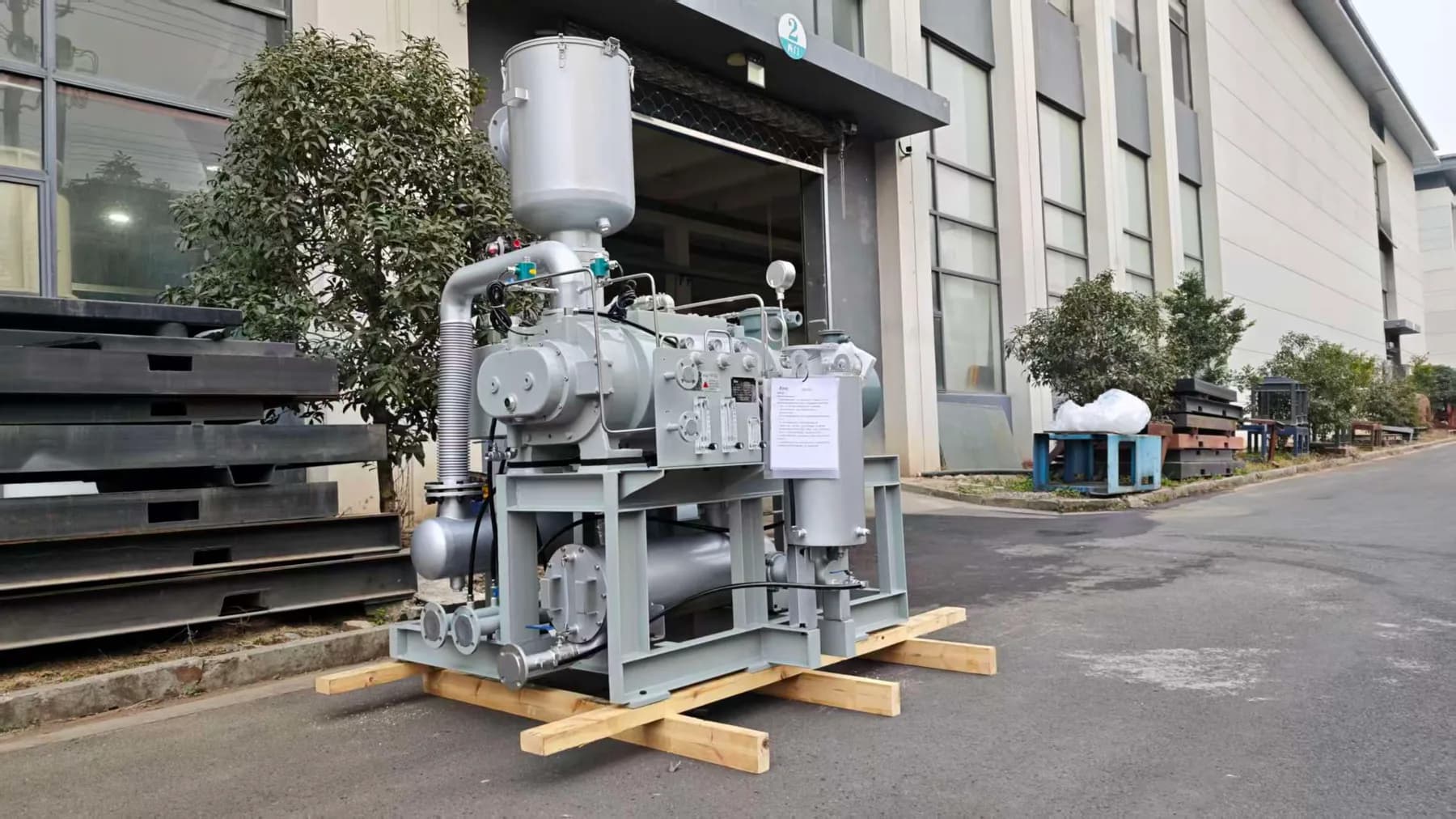
- A dry screw vacuum pump quote can begin with two values: working pressure and volumetric flow rate.
- The first review does not need a complete process package. Missing items can be checked later, before the pump configuration is finalized.
- A model name alone is not enough because model codes are not standardized between manufacturers.
- Gas composition, inlet temperature, exhaust temperature, duty cycle, and site safety requirements reduce selection uncertainty.
- If you already have one of our models in mind, you are welcome to send the model name directly for a quote.
Start with working pressure and volumetric flow rate
You can begin a dry screw vacuum pump quote request with two values: working pressure and volumetric flow rate. These two items are enough for an initial selection review, even when the full process data is not ready.
The first review is not the final configuration. It gives us a practical operating point. The remaining process details can then be checked in the next discussion.
Working pressure tells us where the pump must operate
Working pressure is the pressure point where the pump must deliver useful capacity for your process. The same pump can deliver different flow rates at different pressure points, so the pressure value is part of the selection, not background information.
The first inquiry does not need to be perfect. An approximate value is acceptable, and we can follow the unit your team uses. Buyers often send Pa, mbar, Torr, or kPa. When needed, we can check the conversion together, such as 1 Pa = 0.0075 Torr.
Volumetric flow rate tells us how much gas must be moved
Volumetric flow rate, required flow rate, and pumping speed are not always used the same way by every buyer. In the first RFQ, use the wording your team already uses and send the approximate value. Before recommending a pump or system configuration, we will check what that number means in your process.
The same model can behave differently at different pressures
A model name alone does not describe the full operating point. For example, TF105 can have a flow rate of 17.8 m3/min at 40,000 Pa(a), while the flow rate can reach 19.4 m3/min at 20,000 Pa(a). Energy consumption also changes with the pressure point, so the quotation should be based on the operating condition, not only the model label.
RFQ checklist for the first review
Working pressure and volumetric flow rate are enough to start the discussion, but they are not the only conditions that affect the final pump configuration. Gas composition, temperature, operating hours, and site safety requirements may change how we review condensation risk, corrosion risk, cooling, sealing, and system protection.
| Initial RFQ data | Configuration details to review next |
|---|---|
| Working pressure, with the unit your team already uses | Gas composition to be handled |
| Volumetric flow rate, required flow rate, or pumping speed | Inlet gas temperature |
| Existing pump model, if you are replacing or comparing equipment | Exhaust temperature requirement |
| Approximate values, if the final process data is not ready | Duty cycle and operating hours |
| Your preferred contact path for follow-up questions | Site safety requirements |
Use the left column to start the inquiry. Use the right column to prepare the follow-up discussion before the pump or system configuration is finalized.
Why not quote by model name only?
Model names are not standardized between vacuum pump manufacturers. One supplier's model code may point to a different flow range, pressure range, motor configuration, or internal design from another supplier's code. Working pressure and volumetric flow rate are clearer starting points.
If you already want to ask about an SC model such as TF105 or TF225, that is also welcome.
What if the process data is incomplete?
Incomplete data is normal at the beginning of a vacuum pump inquiry. Send the working pressure and volumetric flow rate first, or send the model you are considering. If gas composition, temperature, duty cycle, or safety requirements are missing, we will keep them as open items and check them before the configuration is finalized.
How to start the quotation discussion
Send the two starting values through the contact page, then add any process details you already know. You do not need to complete a long technical form before the first discussion. Start with the values that shape the pump selection, then review the remaining conditions step by step.