
Plastic Forming - Customer-site case study
How TF105 reduced power consumption in thermoforming
A Zhejiang thermoforming factory needed a more efficient vacuum system for repeated forming cycles. SC Air Power Tech worked with the plant team to review the operating point and run a 24-hour production comparison with one TF105 dry screw vacuum pump. The result helped the factory decide how to equip its new expansion line.
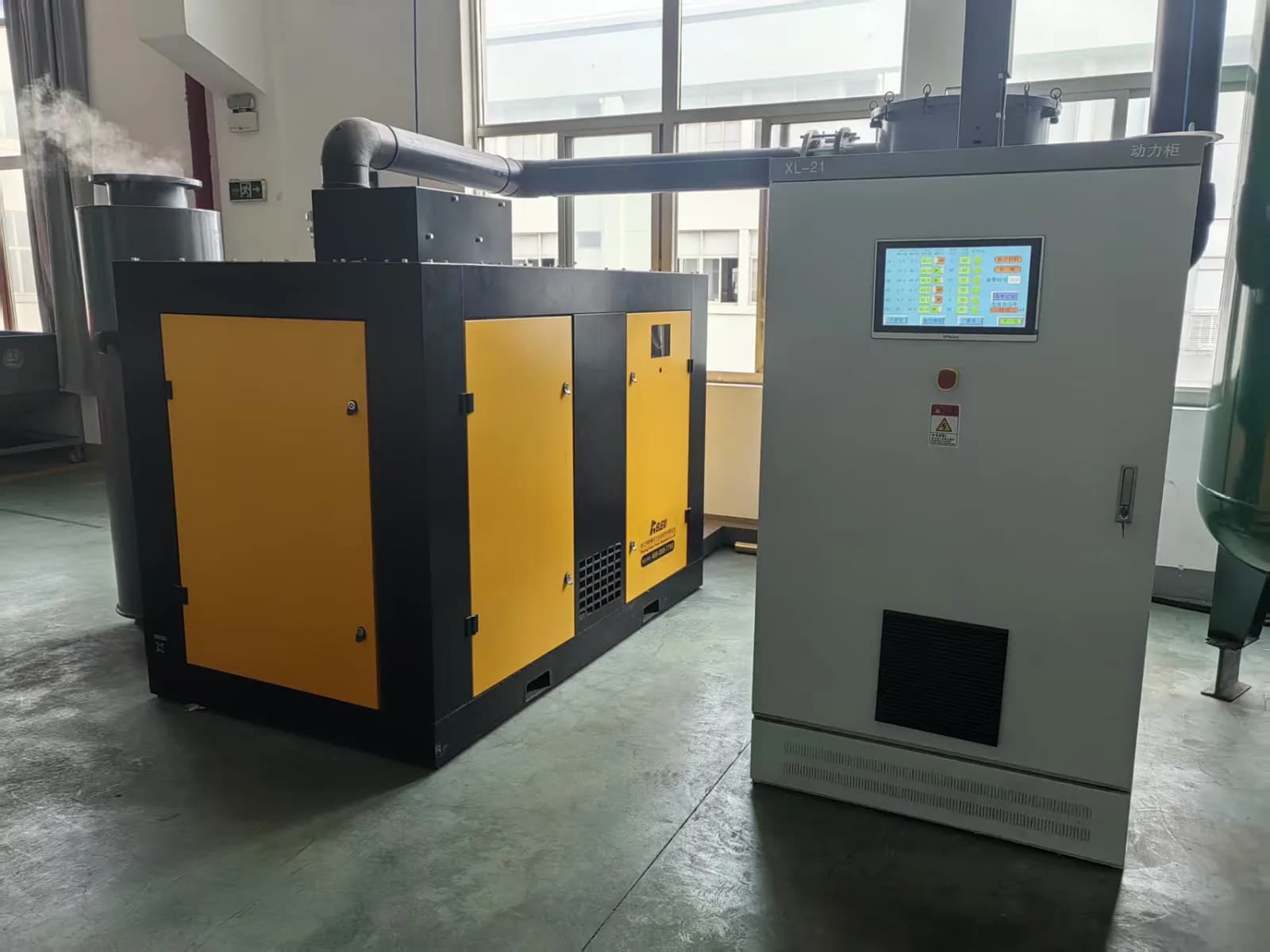
Comparison result
40%
lower energy use in a 24-hour production comparison
Application
Plastic thermoforming
Location
Zhejiang, China
Customer required operating point
17.8 m3/min at 40000 Pa(a)
Test comparison
212 kWh with TF105 vs 354 kWh before
Project background
The project started when the factory's water ring vacuum pump group came up for maintenance and replacement review. After SC Air Power Tech learned about the situation, we proposed testing a dry screw vacuum pump system as an alternative. The factory was also working toward energy-saving and carbon-reduction goals in China, which made lower power consumption a practical reason to test the proposal in production.
Vacuum duty in the process
In this thermoforming line, the customer needed a working pressure of 40000 Pa(a). The vacuum duty followed the rhythm of the forming cycle: pull the heated sheet onto the mold, hold the formed shape before release, and recover the line before the next cycle starts. This is the same application direction covered on our plastic forming vacuum pump page.
Pull-down vacuum
During pull-down, the vacuum system removes air between the heated sheet and the mold so the material can follow the mold surface.
Holding during forming
After pull-down, the line needs stable vacuum while the formed part sets before release.
Cycle recovery
Before the next cycle starts, the pump package has to recover the line again. Mold volume, leakage, and line size all change the air load the pump must handle.
Existing system challenge
The original vacuum supply used 26 water ring vacuum pump systems, and some of the equipment had reached a maintenance and replacement review point. Because not all existing units were damaged, the project was not a full replacement of the current line. The comparison test helped the factory decide whether a dry screw system should be used for the new production capacity instead.
SC solution reference
The reviewed operating point was 17.8 m3/min at 40000 Pa(a). SC Air Power Tech first tested one dry screw vacuum pump against the factory's existing production duty. Based on the flow requirement and the 24-hour energy-use comparison, the dry screw vacuum pump system was selected for the customer's new expansion line.
View TF105| Model reference | TF105 |
|---|---|
| Operating point | 17.8 m3/min at 40000 Pa(a) |
| Test setup | One TF105 dry screw vacuum pump tested in production for 24 hours |
| Expansion use | Dry screw vacuum pump system selected for the factory's new expansion line |
Verified result
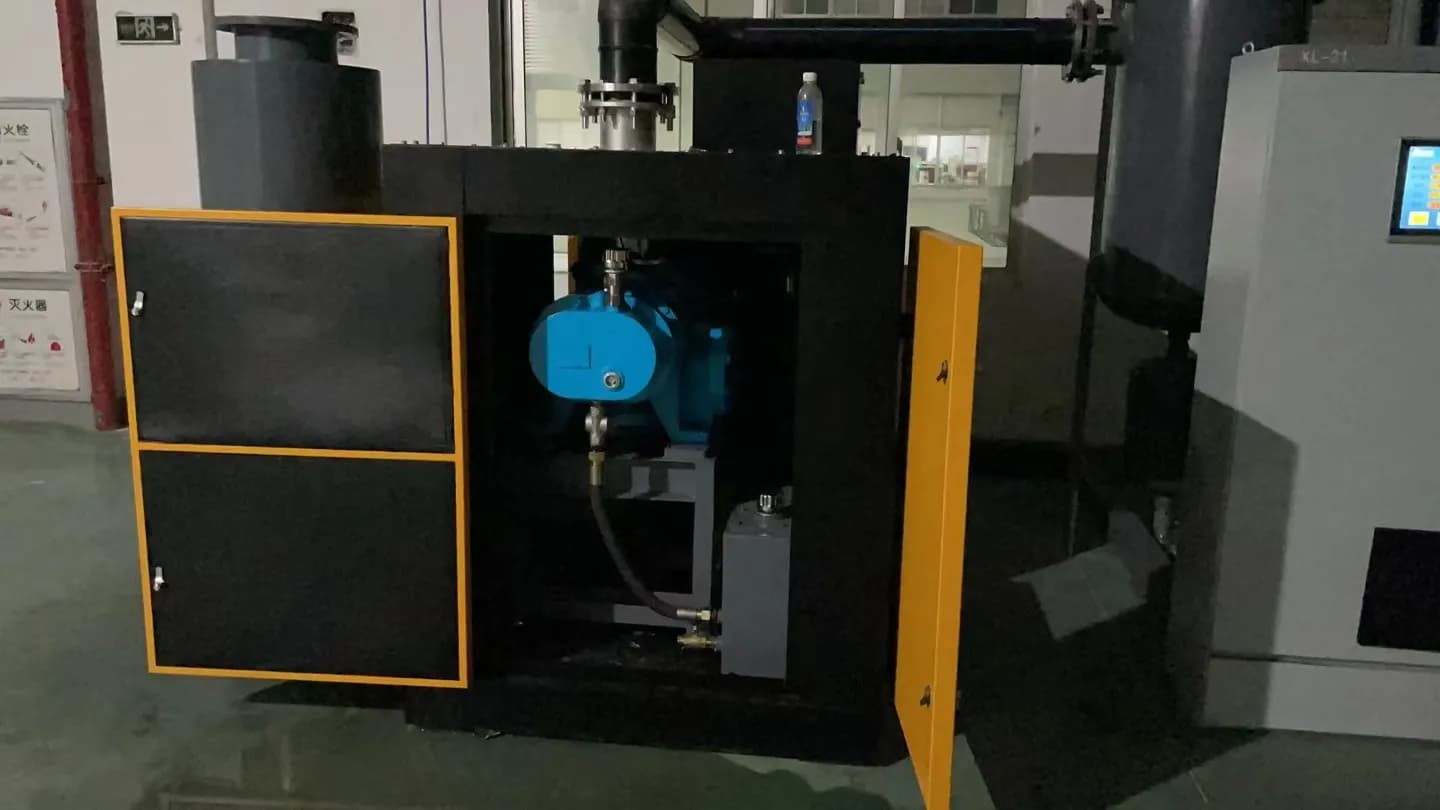
During a 24-hour test on the same production line, the original water ring setup used 354 kWh. With the SC dry screw vacuum pump running under the same operating conditions, the line used 212 kWh. The tested pump met the required flow rate and reduced energy use by about 40%.
The customer's existing 26 water ring vacuum pump systems were not all damaged, so this project did not become a full replacement of the current line. The SC dry screw vacuum pump system will instead be used for the factory's new expansion line.